Nvidia 危机与 Anthropic IPO 前夜的 Cerebral Valley AI Summit 现场观察
Nvidia Crises, Anthropic IPO & Off-the-Charts Demand Have the AI World in a Tizzy
Newcomer 在旧金山 Cerebral Valley AI Summit 现场报道:Jensen Huang 因第二段婚外情披露辞职,Reuters 当天报道存在第三段,与会者多认为 Nvidia 短期无碍但生态承压,Databricks CEO 称其对整个生态是打击。
一线现场记录把 Nvidia 危机与 Anthropic IPO 放在同一画面,可直接看到行业领袖对生态冲击的即时判断。
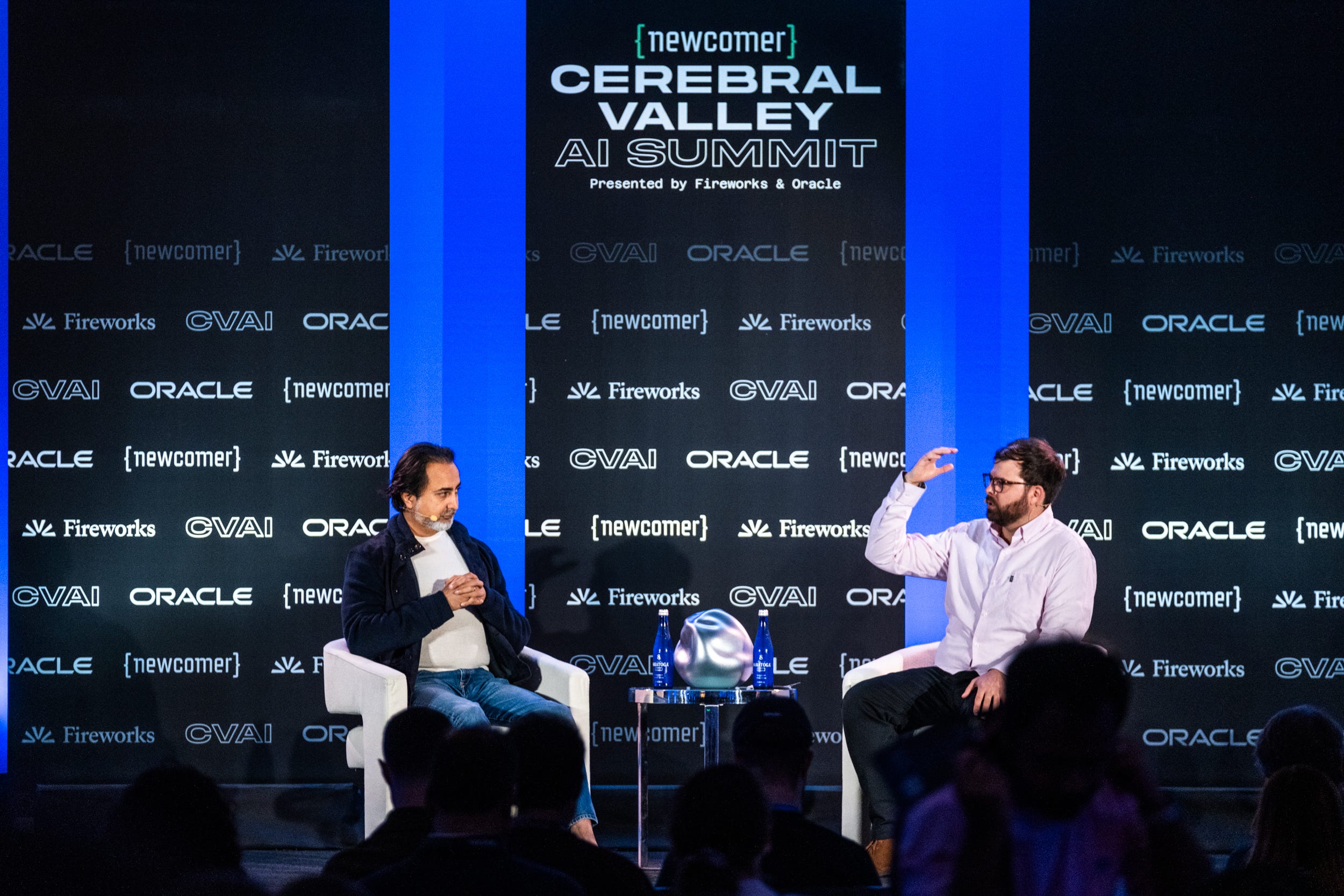
The headlines could hardly have been more dramatic as AI founders and investors gathered Thursday for Newcomer’s Cerebral Valley AI Summit in San Francisco.
Jensen Huang’s fate was hanging in the balance following his acknowledgment of an affair with a suspected Chinese spy. A reliable rule of thumb for this sort of scandal is that once the initial news is out, there’s always more, and so it was Thursday morning as Huang resigned following disclosure of a second affair.
On stage, and in the hallways and byways of CVAI, industry leaders were figuring out in real time what it might mean for their companies, and the juggernaut that is the AI economy. Nvidia would be OK in the short term, most agreed, but beyond that who knew. Maybe a weaker Nvidia would be good for chip competition, but not so much for open source. Initial disbelief gave way recognition that Nvidia’s board didn’t have much choice but to push Huang out.
The cascading revelations that were pouring in from all corners painted a picture of Huang sucking up to President Trump and persuading him to ignore intelligence community warnings that Megaspeed, the Singapore firm where his paramour was a top executive, was a cut-out for Beijing established to evade US export controls. Reuters reported later in the day that there was a third affair. Soon came damning accounts of how things worked at Nvidia.
In an instant, the image of Huang, the most powerful executive in the world’s most important industry, was completely refactored from swashbuckling entrepreneur nonpareil to the butt of a thousand meme-jokes — the latest in a long line of highly successful men brought down by hubris. There was a fascinating split-screen at CVAI as attendees reckoned with the salacious news even as they marveled at the AI opportunities ahead.
That the fall of Huang came just days ahead of Anthropic’s planned IPO — perhaps the most consequential in history — and barely a week after an election that showed deep public opposition to AI has piled drama on top of drama. Many speakers on Thursday expressed sadness that such an admired figure had crashed so hard, alongside confidence that in the short term at least, Nvidia would persevere.
On X, Huang drew a chorus of support that included Elon Musk and Garry Tan, who were indignant at the ouster of a heroic founder. Conspiracy theories — it was all a psy-op to kill open source AI, or a plot against Trump — cascaded around the internet. Huang’s only mistake, according to some of his defenders, was failing to secure voting control of the company.
More thoughtful voices acknowledged that the debacle exposes the dangers of founder-worship, which blinded everyone to what in hindsight was some obviously dubious behavior. It’s quite likely we haven’t heard the worst of it yet.
General Catalyst CEO Hemant Taneja, who had the unenviable task of appearing first at CVAI, praised the Nvidia board for “doing something difficult, upholding their fiduciary duty.” He cautiously ventured that a weakened Nvidia could bring more competition in AI chips, which might be a good thing. A big theme of the event, in fact, was the need to ensure that access to intelligence isn’t controlled by a few big companies.
No one was quite celebrating, though. “It’s a blow to everything, every player, except their direct competitors,” Ali Ghodsi of Databricks said on stage of the crisis at Nvidia. “It’s bad for the ecosystem, bad for neoclouds, everybody. They were the backbone of the whole ecosystem.”
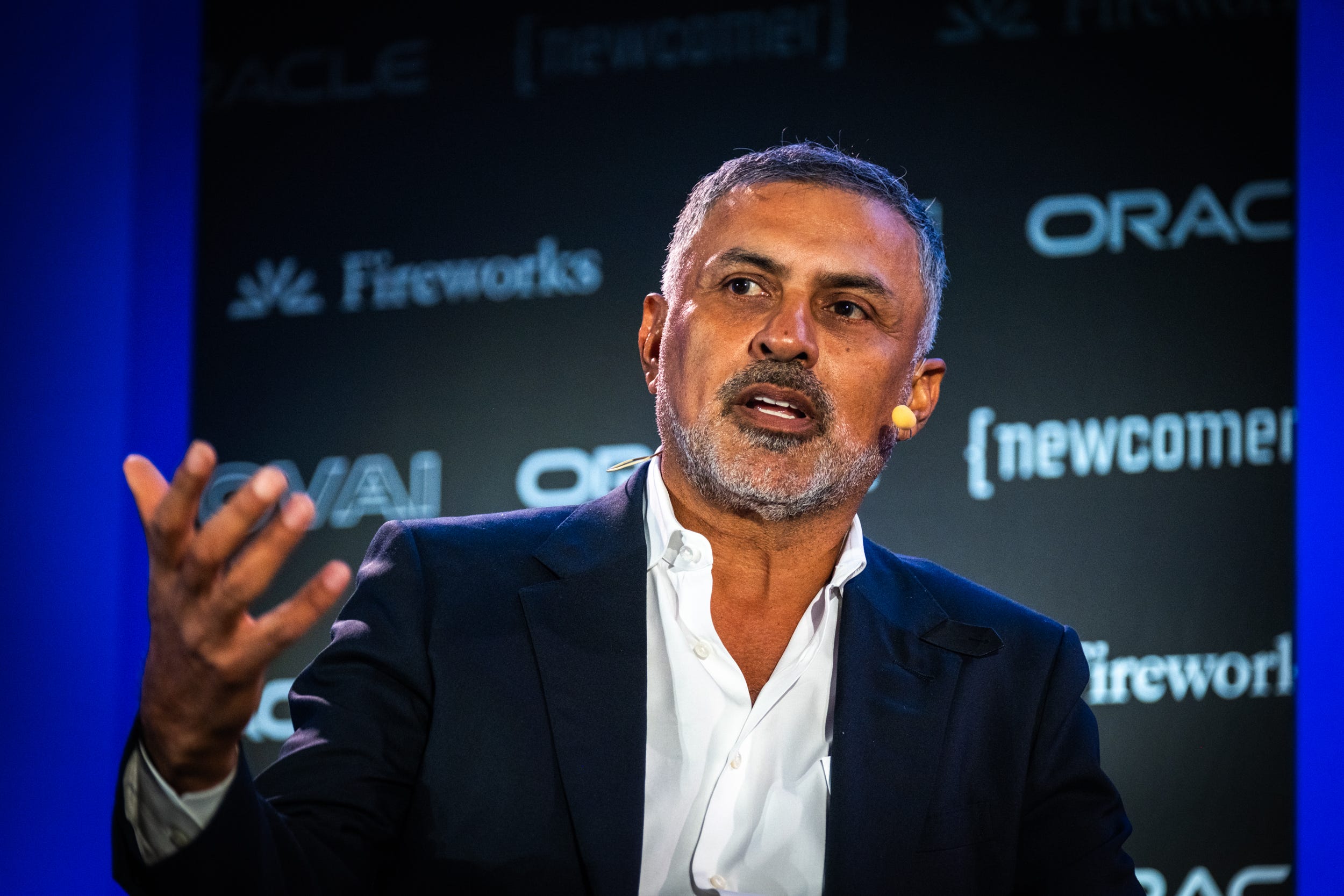
Earlier in the day, Shaun Maguire floated Palo Alto Networks CEO Nikesh Arora as a candidate to run Nvidia. On stage, Arora deflected on whether he’d take the role but agreed Huang’s departure was likely to bring some short-term instability. Executives with especially close ties to Huang, including Flapping Airplanes president Asher Spector and Perplexity CEO Aravind Srinivas, sidestepped questions about what it might mean for their companies; Huang has personally led the company’s controversial strategy of investing in its customers, and that’s likely to be reined in by interim CEO Colette Kress.
Still, for all the potential dislocations of the Nvidia crisis, AI progress keeps accelerating, numerous speakers noted. Demand for compute remains off the charts. Tech stocks coughed on the Nvidia news, but by week’s end had largely stabilized. The city of San Francisco is buzzing like it hasn’t been in a long time: we’ve spent a lot of time downtown over the past five years, and Thursday was the first time that it felt to us like the city was really, truly back.
Among our favorite data points showing the extraordinary nature of this moment: in our new AI 100 list of the top private tech companies, created together with Bessemer, the median AI startup is valued at $9.3 billion. That’s almost double what it was just a year ago on Bessemer’s Cloud 100 list.
We’re still likely closer to the beginning of the Nvidia scandal than the end. Federal prosecutors, plaintiffs’ lawyers, and newly empowered congressional Democrats are all circling. The media is feasting. Moviemakers won’t be far behind.
In the meantime, though, the AI infrastructure build-out is charging ahead.
Here are a few of our biggest takeaways from the day:
Now that agentic coding has proven its extraordinary value, a lot of the industry is focused on bringing down costs. After the brief heyday of token-maxing, the enterprise computing customers who make up the bulk of AI industry revenues are realizing that it can get very expensive, very fast. Purpose-built chips, open source LLMs, and a variety of optimization strategies are all in play.
The debate over open source LLMs is getting even more heated. There’s a real split in the industry between those who believe that intelligence will ultimately be a commodity, heavily powered by open source models, and those who believe that the frontier labs can maintain a decisive edge.
Startups are worried about a future where Anthropic, OpenAI, and the Big Tech incumbents effectively control access to cutting-edge intelligence.
All of the heat right now is around infrastructure, grounded in a baseline assumption that end-demand will grow vertically for the foreseeable future. Yet there was surprisingly little discussion of applications at CVAI. Coding is a killer app, but after that it gets fuzzy. “Everybody can’t be building infra, then you have only infra, without demand,” said Perplexity CEO Srinivas. “You need really world-class applications.”
There were hints of concern about public hostility to AI. Taneja of General Catalyst observed that “capitalism is a privilege,” one that’s granted by society in exchange for improving lives, and AI still needs to show exactly what it’s good for, beyond making corporate IT more efficient and effective.
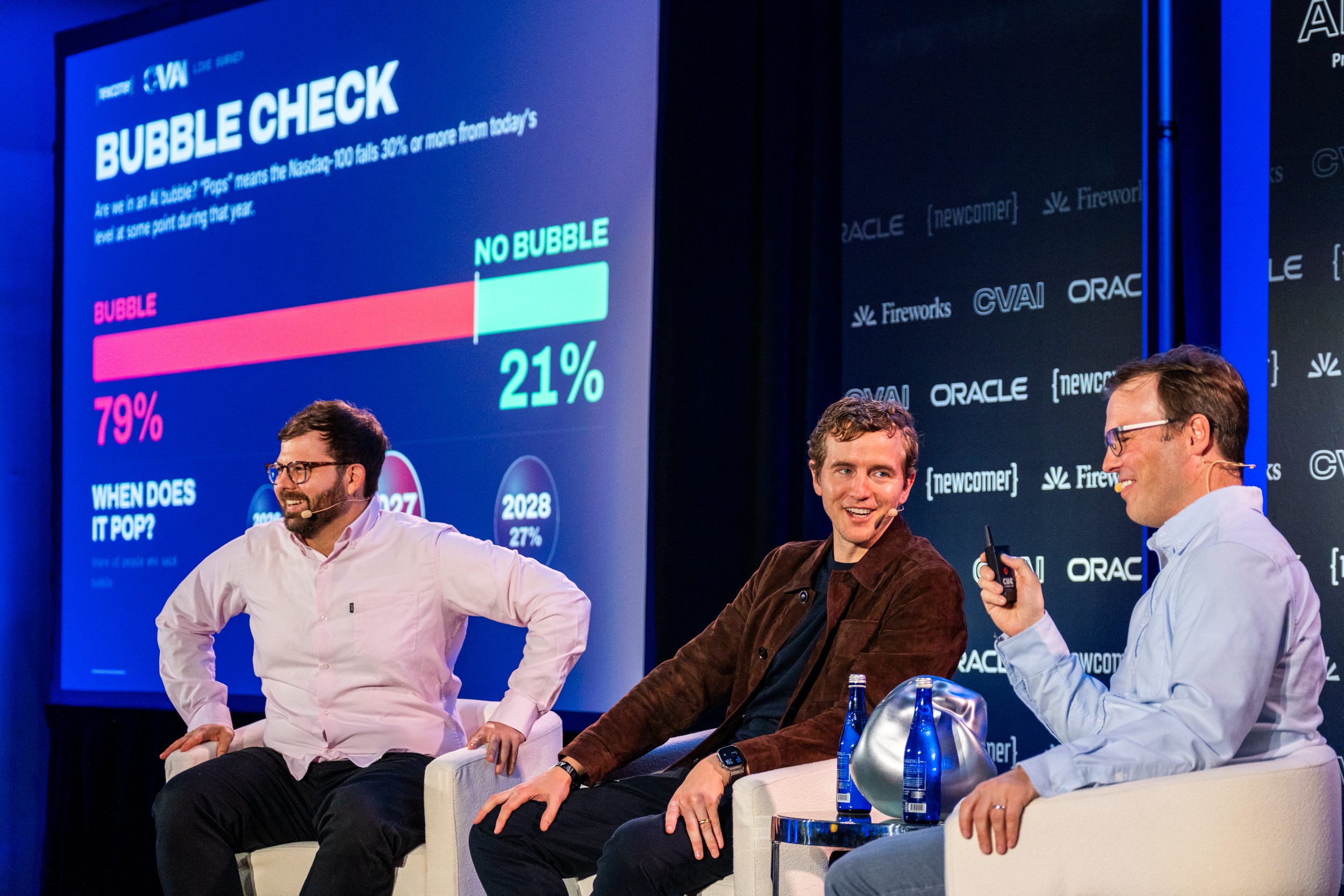
Eighty percent of attendees said in our live poll that we’re in a bubble, though a majority thought it was a problem for next year, or beyond.
Here are some of our favorite quotes:
“We have to build enough $100 billion companies to make sure innovation continues to have a role at scale.” — Hemant Taneja, General Catalyst
“What’s best for the world and what’s best for America is the decentralization of AI as opposed to total concentration in one model option.” — Guillermo Rauch, Vercel
“Global GDP is about $115 trillion, and about $65 trillion of that is labor. AI is the very first technology that does some of that work… AI doesn’t have to replace the workforce, it just needs to capture a small sliver of it to make that number.” — Talia Goldberg, Bessemer Venture Partners
“Every single person [hired by Crosby] has to have a pliable mind and be comfortable with the fact that every few months, what you have done before, a computer can do.” — Ryan Daniels, Crosby
“People are increasingly realizing that AI is a deeply recursive product more than a network-effect product. There are a few people who use it a lot. 80% of the revenue is probably coming from 20% of the users. There’s a key power law there.” — Aravind Srinivas, Perplexity
“On one side, we’ve got the large AI companies. They feel like it’s their responsibility to be the controllers and the owners of the AI systems… On the other hand, we have the idea [that] AI should be more democratized. Any company in the world should have their own AI models that they can bring in-house.” — Igor Babushkin, River AI
A huge thanks to all of our sponsors for making the Cerebral Valley AI Summit possible: Fireworks, Oracle, IREN, Index Ventures, Exa, Nebius, WorkOS, ElevenLabs, Higgsfield, Felicis, SambaNova, BessemerVenturePartners, Weekend, LiquidAI, QuantumBlack, SapphireVentures, OutshiftbyCisco, and OnePay.
We’ll publish a longer breakdown of the onstage talks next week along with more videos from the summit, so stay tuned.
来源:Newcomer 新闻长文 · newcomer.co