Newcomer 分析:民主党中期选举大胜是硅谷的警钟
The Blue Tsunami Is a Victory for Democracy — and a Wake-Up Call for Silicon Valley
Newcomer 评论认为中期选举民主党大胜是对民主的胜利,也是对亲近 Trump 的科技与 AI 公司的警钟。选后芯片与 AI 基建股大跌,因政治反对和利率高企可能令数据中心更贵更慢;41 项数据中心地方公投中 40 项被否决,Musk 在德州逾 4 亿美元助选失败后面临更不友好的监管环境。
The Week in Short
The midterm elections mark a win for decency and common sense and are a wake-up call for the tech and AI companies that had gotten cozy with Trump but will now have to grapple with a new political climate. After a Wednesday rally, stocks plunged on fears of a slower data center buildout. The blue wave in Texas could spell trouble for Elon Musk in particular. Enterprises love AI tools and have been warming to open-source models, new data from Menlo shows. Drones and AI inference startups bring in billions. Google threatens a poison pill for educators who don’t want AI in the classroom. The New York Times digs into the psyche of Dario Amodei. Two tech thought leaders pen a prediction for AI abundance. SaaS startups face a new risk of getting distilled by AI agents. Shaun Maguire’s SpaceX model sparks a classic Twitter battle.
The Main Item
New Political World Promises Data Center Delays & Challenges the Industry to Show its Societal Worth

Of all the possible day-after reactions to the midterms, one that was not on our bingo card was investors looking at a Democratic tsunami — and then piling into Big Tech stocks.
For a minute there on Wednesday, we thought people had suddenly come around to the view that we’ve been preaching here since 2024: the lawlessness, bigotry, economic illiteracy, isolationism, and ubiquitous corruption of the Trump regime were very, very bad for the tech industry. We were thrilled to see candidates who embraced compassion, reason, and fairness vanquish the swamp trolls and grifters who’ve flourished under Trump.
Everyone had finally come to their senses! We get that lower taxes and less regulation are usually good for Silicon Valley (if not always the country). What’s even better? Rule-of-law government, good relations with trading partners, more liberal immigration policies, basic decency in public life and business affairs, and an honest and thoughtful approach to inevitable AI regulation.
Alas, we were crestfallen when we saw that the post-election stock surge might be due to something other than the world abruptly seeing things our way. One explanation, amusingly, was that Democrats would save tech companies from themselves by slowing data center development and thus limiting the scary capex budgets of the hyperscalers. But we’d still like to think that optimism in the wake of Trump’s defeat had something to do with it.
In any case, by Thursday, the uptick had quickly reversed and AI infrastructure and chip stocks especially were tanking and taking much of the market with them. That market move is easier to explain: it now seems obvious that large data centers, at least those on planet Earth, will be more costly than planned — maybe a lot more costly — as political opposition slows or blocks projects and interest rates remain elevated. Tech stocks were rebounding somewhat on Friday but we expect more pain in the markets as this recalculation plays through.
Yet we also think this moment could offer a healthy reality check for the AI industry. One way or another, AI companies are going to have to wrestle with the fact that they haven’t shown that their wares will bring broad benefits to the masses — as opposed to, say, engineering managers, or venture capitalists. Until they do, political resistance to the AI agenda, on data centers and otherwise, will be the new normal. It’s much more than a messaging problem.
Even beyond that, Silicon Valley has some soul-searching to do. The data center revolt is clearly linked to popular resentment of tech power and wealth, and executives and investors led by Elon Musk, Marc Andreessen, and Mark Zuckerberg have simply fanned the flames by adopting the Trumpian view that the concerns of the people are much ado about nothing.
We were flummoxed and disheartened that so many powerful tech figures bet so heavily on Trump. Even leaving morality aside, it was a foolish gamble that backfired spectacularly, helping turn the country against AI and ushering in a Democratic-led Congress that’s going to be in no mood to hear about the industry’s needs.
But Tuesday’s election opens up an opportunity to build a much more thoughtful discourse on AI and the relationship between technology and society. Reid Hoffman, among the few top VCs who have remained an outspoken Democrat, staked out some ideas in that regard in a blog post Thursday.
There are real, legitimate differences on AI policy and many other issues, but our hope is that we can wrestle with them through normal modes of democratic politics, however flawed, and get away from the ugly extremism of recent years. One way we’ll know if there’s progress: here at Newcomer, we’ll be writing a lot less about politics.
Five Election Tweets from Talkative Techies
Elon Musk offered only a joke.
Keith Rabois, after predicting a Republican sweep, had to settle for Florida’s least-bad GOP showing.
Dylan Patel from SemiAnalysis is worried about Gina Hinojosa’s victory in the Texas governor’s race.
Patrick Collison, CEO of Stripe, has been musing on Alexis de Tocqueville’s Democracy in America.
And finally, you can bet Chamath Palihapitiya engaged in the blue wave memes.
Data Center Backlash
Texas Results Threaten Musk’s Plans
After spending more than $400 million, with around half of it in Texas, on a failed effort to elect Republicans, Elon Musk is now facing down a much more hostile regulatory environment in his home state.
Not only did governor-elect Gina Hinojosa make data center opposition, and Musk, a central component of her campaign, but Sarah Eckhardt, the state’s newly elected comptroller, will now review applications for statewide economic development initiatives like the Jobs, Energy, Technology and Innovation Act (JETI) that helped Musk gain approval for his Terafab chip factory. She campaigned on running the office as a watchdog that would be highly critical of big-business subsidies.
Tesla and SpaceX shares were down 11% and 9% Thursday after each dropping roughly 3% on Wednesday. Most stocks tied to AI, and especially chip stocks, took a beating Thursday.
Of the 41 data center measures on state and local ballots, voters sided against data centers in all but one. Fresh delays are already appearing:
In Effingham County, Georgia, county commissioners postponed a vote on a new data center site right before election results rolled in.
Satellite images of construction sites show a Microsoft data center project supported by IREN lacking power generators and cooling equipment. Another project for Microsoft led by Nebius and DataOne in New Jersey is facing major delays from permitting issues.
A fresh report from GlobalData says that the average data center project is now taking 33% longer to complete due to public opposition and structural issues like grid connection delays.
Cerebral Valley Show
Why Is Everyone Turning Against AI?
Three Big Charts
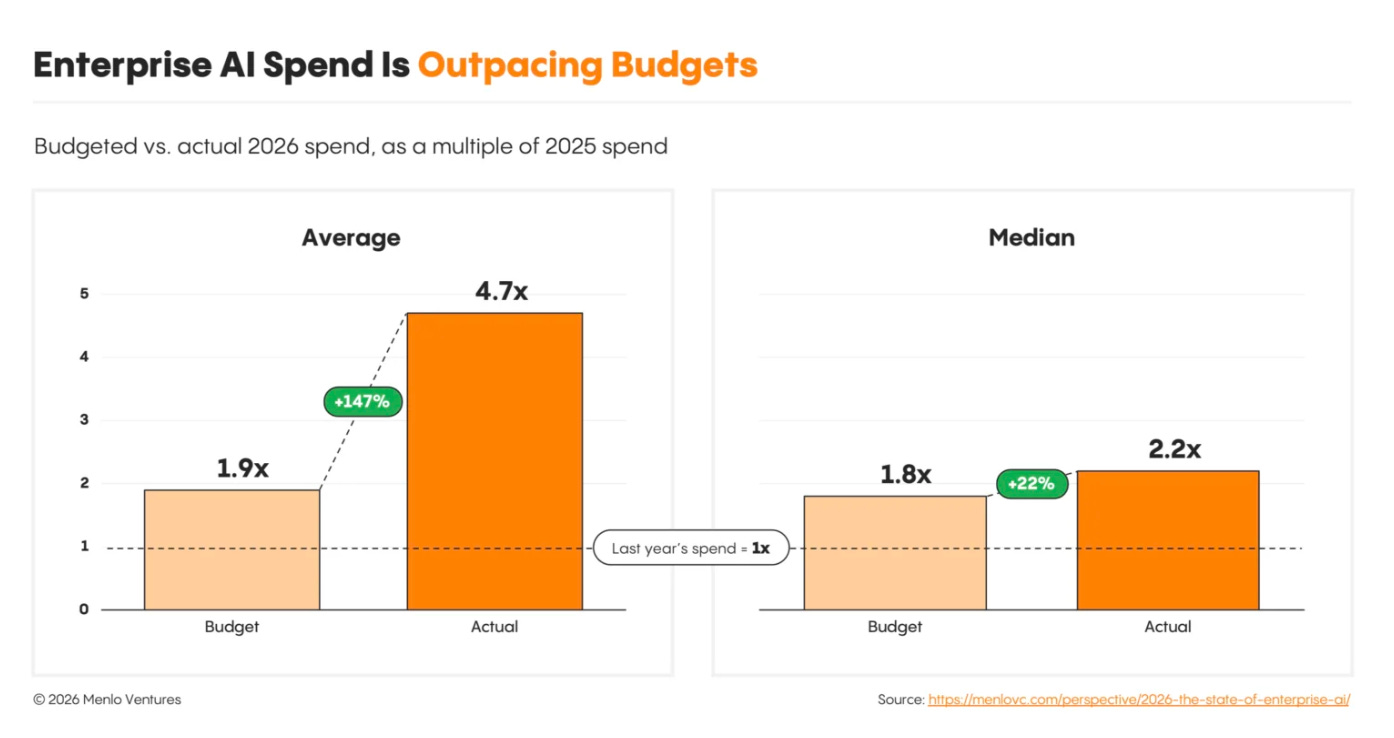
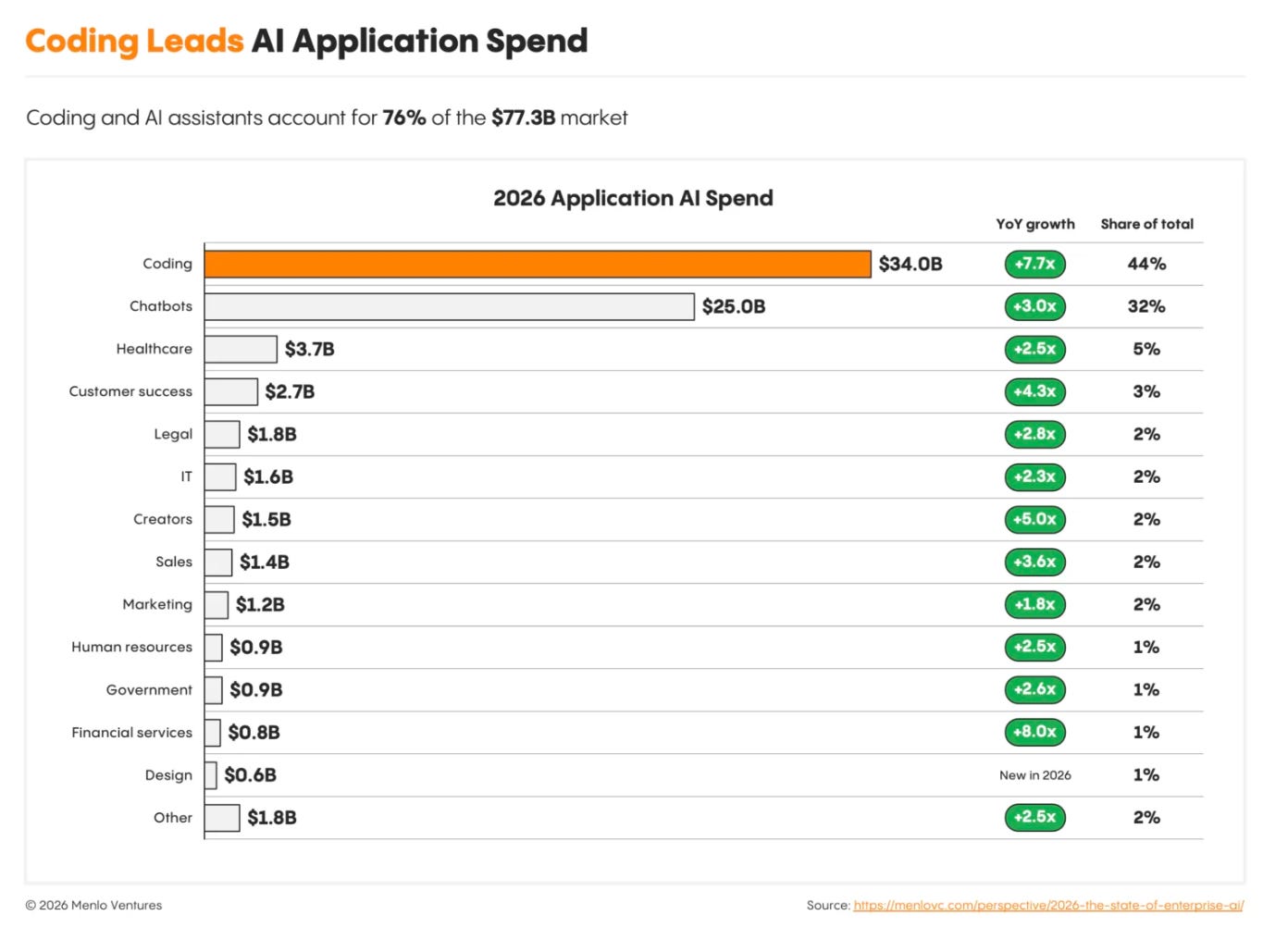
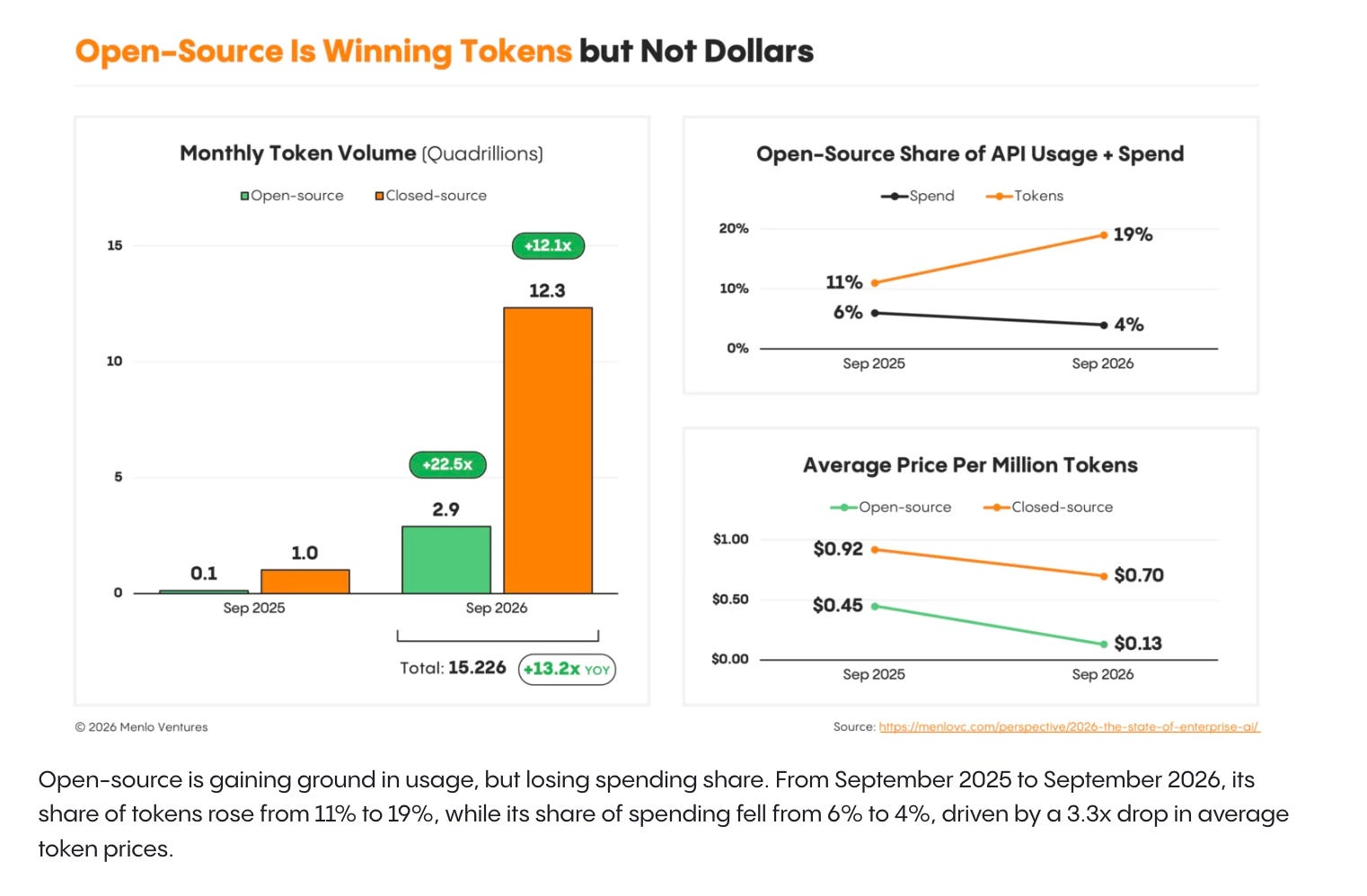
Enterprises Love AI, Coding Tools, and Open-Source Models
Businesses can’t get enough of AI tools, data from Menlo Ventures’ State of Enterprise AI report reveals. These charts visit AI spending versus budget, which AI applications are accounting for that spend, and how open source is fitting into enterprise AI.
Six Notable Deals
Fal, Zipline, Northwood Space, Applied Compute, Traversal + Valor Equity Partners
AI infrastructure and hardtech startups took most of this week’s biggest checks. Plus, Valor Equity Partners — the growth fund run by major Elon Musk backer Antonio Gracias — is raising a big new fund.
Inference startup Fal raised $1.65 billion across its Series E and F rounds. The Series E was led by Sequoia and the Series F was led by Bessemer Venture Partners. Other investors in the F include Nvidia, Sound Ventures, and T. Rowe Price.
Drone delivery startup Zipline raised $1.5 billion in new funding led by Paradigm, WCM Investment Management, and Layer Global. Other investors include Valor Equity Partners, Fidelity, Uber, Tiger Global, JPMorgan, ARK Invest, and Salesforce Ventures.
Northwood Space, a satellite antenna builder and ground station provider, raised $375 million in Series C funding co-led by a16z and DFJ Growth. Other investors include Alpine Space Ventures, Washington Harbour Partners, StepStone, and In-Q-Tel.
Applied Compute, which builds custom open-source AI models for businesses, raised $350 million in a new funding round led by Elad Gil. Other investors include Kleiner Perkins, Lux Capital, Hanabi Capital, Nvidia, Blackstone, Shopify Ventures, HubSpot Ventures, Diffusion, Definition, Timeless, Layer Global, Neo, Abstract, Nova, Quantum Light, First Harmonic, and Swish.
Traversal, which uses AI to review and troubleshoot software issues, raised $120 million in Series B funding co-led by Kleiner Perkins, Redpoint Ventures, Khosla Ventures, and Sequoia Capital.
Valor Equity Partners has raised nearly $3.3 billion so far for a new fund, per securities filings.
Stories We’re Reading
Google Hits School Trouble, NYT Profiles Amodei, Manidis & Roberts Enter the Essay Arena, Reverse Engineering in the Spotlight
A new profile of Dario Amodei sheds light on the outsized role Silicon Valley’s ideological movements have played in his thinking. The New York Times piece highlights how, as a doctoral student in the mid-2000s, Amodei was known as an enthusiastic proponent of transhumanist inventor Ray Kurzweil, author of The Singularity Is Near, and rationalist writer and AI researcher Eliezer Yudkowsky, widely considered the doomer-in-chief. VC eyebrows might also be raised by Amodei arguing while working at OpenAI that the firm should no longer accept money from Peter Thiel due to his donations to Donald Trump’s 2016 campaign, given that Founders Fund later co-led Anthropic’s Series G. But if Amodei’s beliefs remain as liberal as reported, he seems well-placed to take advantage of a resurgent Democratic Congress, particularly as the rest of Big Tech has unwisely chosen to back a lame-duck president. (Although, he will first have to face some investor skepticism that Anthropic can achieve a $1.5 trillion valuation in its IPO.)
Google announced on Tuesday that it would allow schools to turn off its AI tools in its educational software after some outside pressure from educators and parents who wanted more control over how their children interact with AI. However, as part of the change, any school that switches AI settings off will no longer be able to access Google Search. Chris Phillips, Google’s vice president for education, explained the decision by saying that search and AI were “deeply integrated.” The decision has frustrated many antitrust advocates who are critical of Google — former FTC chair Lina Khan said the company was “using its search monopoly to coerce schools” into adopting this technology. Officials like New York City Mayor Zohran Mamdani, Senator Bernie Sanders, and Senator Richard Blumenthal swiftly condemned the changes. The company retreated a bit from its hard stance after the backlash and said in a statement later Tuesday that schools would be able to turn individual features on or off, including search, rather than a blanket removal. The Wall Street Journal reported a month ago that teachers say Google’s AI-fueled edtech push into classrooms has been terrible for quality learning, with kids becoming fully dependent on chatbots for homework, readings, and emotional support.
Will Manidis and Joe Roberts’ The Commanding Heights has entered the canon of techno-capital investment theses written as overwrought essays. The 145-page text features plenty of purple prose and allusions to literary greats like Blake and Huxley, but the thrust of the piece continues on from Leopold Aschenbrenner’s infamous manifesto, Situational Awareness: frontier models will get better and better as the US and China consider it a national security priority, and scaling laws will hold. It breaks out by arguing that intelligence will become cheap, abundant, and commoditized, so frontier labs won’t keep the wealth. It also argues that bottlenecks such as chips and power consumption are temporary, and that durable gains will go to whoever controls distribution of machine intelligence to the real economy, using historical examples including railroads and Google Ads. Manidis toldBloomberg Tech that “diffusion is the real story of AI, and that the companies that power that diffusion will become the overwhelming chunk of the economy over the next decade.”
Embattled SaaS companies have yet another AI fear to worry about: agents reverse-engineering their software from scratch. A piece inScientific American this week broke down the GitHub project Reverse Engineer Anything, or REA, which lets users break software down into binary code and reconstitute it for free personal use. This process previously took months of expert work but can now be achieved by a group of persistent agents. Frontier models have already been used to build open-source clones of Adobe and Microsoft Office software, and developers are wondering how SaaS firms will compete on price if feature sets can be easily produced and updated in-house. Peter Hall, the article’s author, told Newcomer that Anthropic has since cracked down on using Claude Code to clone video games by updating Opus 5.5’s prompt, but it’s unclear how much overall reverse engineering this new restriction will catch. Reverse engineering could be an even bigger problem for small tech companies with less ability to protect their IP. One online commenter, who creates bespoke guitar pedals, expressed his dismay over the ease with which he could replicate his competitors’ products with Claude, “I just... have their award winning algorithms now.”
Tweet Storm
Venture and Banking Twitter Go to War Over a SpaceX Financial Model
来源:Newcomer 新闻长文 · newcomer.co