我们仍处在 AI 发展的指数曲线上。我尽量每两周左右发一篇 Substack 文章,然而随着节奏加快,这有时显得太慢了。在我上一篇文章之后的这几周里,一个 AI 显然破解了数学中最著名的问题之一(伴随着争议),同时人们广泛讨论了 AI 带来的风险以及该如何应对(同样伴随着争议)。我认为这些担忧,连同日益增多的一系列其他忧虑,归根结底都指向我在发文章上遇到的同一个问题:我们这些极为人类化的系统和流程运转得太慢,跟不上 AI 发展的步伐。
我不认为为此担忧的人是错的,但我也认为,仅仅把目光聚焦于未来的 AI——尽管这很重要——忽视了这样一个事实:AI 在当下就已经极其强大。事实上,新的 GPT-6 Astra 和 Fable 5.1 已经足以在经济的大部分领域产生变革性影响,而且在得到恰当引导和驾驭时,它们能够可靠地完成相当于人类数周工作量的事情。
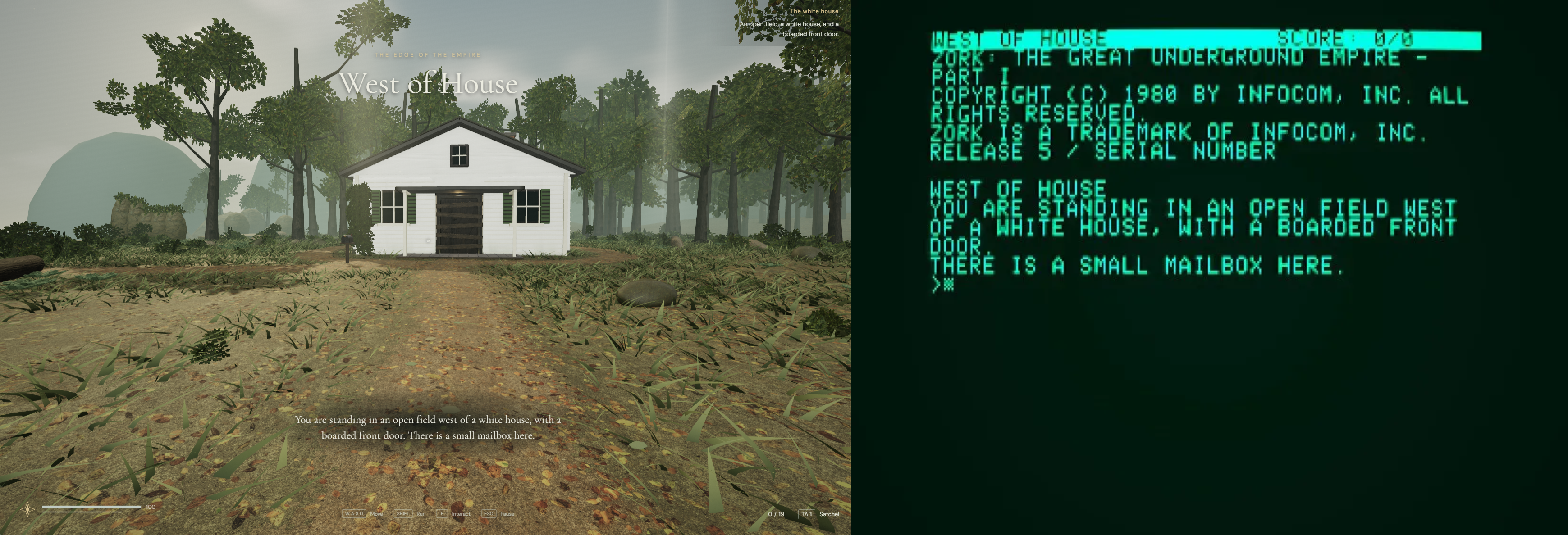
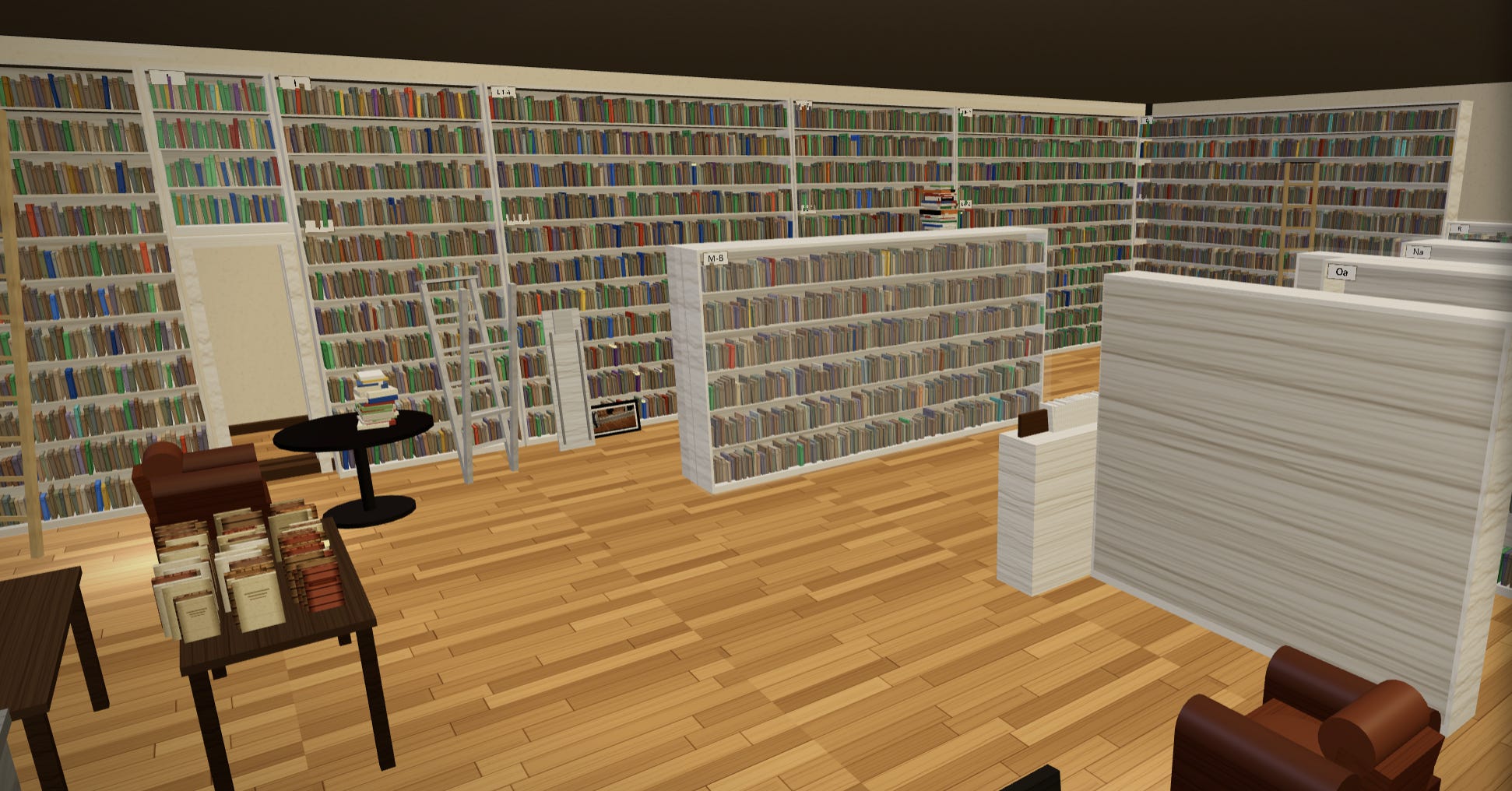
举几个有趣的例子:我让 GPT-6 Astra 把 1977 年的一款文字冒险游戏 Zork 改造成了一款可以玩的完整 3D 动作冒险游戏。Zork 没有任何图形,每个地点都只是一段散文描述,所以 AI 必须自行决定那栋白房子长什么样、grue 长什么样(原版只告诉你,你在黑暗中很可能会被一只 grue 吃掉),以及如何把“与巨魔战斗”变成一段动作序列。我还让 Fable 5.1 尝试用 3D 重建意大利作家翁贝托·埃科的藏书室。埃科在他米兰的公寓里藏有数万册书,而 AI 找不到平面图,于是它决定转而依据十几段视频、基金会拍摄的每个书柜的照片,以及两份藏书目录来工作。它逐帧读取书脊,推断出房间布局,并把它能辨认出的约 5,000 本书安置在 27,000 个书架格位中。它为每本书标注了确定、猜测或未知,并把摄像机从未拍到的书柜画在雾中。这项任务,和 Zork 游戏以及我最近让 AI 做的许多真实世界工作一样,本需要研究人员、程序员和设计师投入数周的人力。但如今,事情就是这样。
我的观点是,尽管关于未来模型能做什么存在大量争论,但现有模型的当前能力几乎没被充分利用,甚至常常没有被很好地理解。比如,在 GPT-6 Astra 做到之前,我并不知道它能够操作 Blender(一款复杂的 3D 建模软件)。
我把它即将出版的新书 Co-Existence 的一份副本给了它,并要求它从 AI 的视角为这本书制作一支预告片。在我没有给出明确指令的情况下,它接着使用了 Blender,搭建出一整段动画 3D 场景(这可不是件容易的事),还写了一份带有一些笑点和反转的脚本(我确实否掉了它加进去的第一个笑话,但第二个相当不错)。随后它自己搞定了如何生成人声、音乐和音效,并在 45 分钟后把这部短片交给了我。最终成品感觉比我想要的更阴森一些,但那是 AI 的决定,不是我的。
为了看看它还能走多远,我给了它这样的提示词:“这不错,但我其实想让你基于 Co-Existence 做一支动作电影风格的预告片。放开手脚玩。不要超过 30 秒。”它又一次写了脚本,并在 Blender 里做了一个 3D 原型。
在我要求一个更具电影感的版本后,它把 Blender 动画当作分镜,通过我的浏览器操作了一个视频生成器,并把生成的镜头剪辑成了最终预告片。我给了一些小的创意反馈,但从未插手任何制作决策,甚至都不完全清楚它是如何完成这些任务的。
你可以在这里看到结果。
这些尝试中存在不少你可以发现的缺陷。但它们同样是 AI 展现出某种判断力和创造力的例子,而这些不久之前还被视为人类独有的特质。而且它们全都只用了我所付费的 ChatGPT 账号 token 预算的一小部分就完成了。我觉得这些是有趣的演示,但它们也有点令人不安,因为 AI 在那些曾经纯粹属于人类的事情上正变得越来越擅长。
不过,这些项目没有一个是自行发生的。是我选择了它们,是我对 Zork、Eco 以及我自己那本书足够了解,才能看出 AI 在哪里出了错,并在第一版不对时要求第二个版本。能力悬垂——也就是这些模型能做的事与几乎所有人实际在用它们做的事之间的差距——是一个机会,因为大多数人并没有把自己的优势带给 AI,而那些这样做的人则能从中获得多得多的回报。
这就是为什么我认为,我们需要专注于我们自身那些即便在 AI 能力不断提升时仍然有用的个人特质。你不是要在产出上试图与 AI 竞争,那是一场必输的游戏。相反,你要把自己的类人优势作为与 AI 协作的基础,去做你们任何一方单独都做不到的事。在我的书里,我列出了四种特别重要的个人优势,如果你想以独特且增强的方式使用 AI 的话:深度知识、广泛知识、品味和能动性。
四大优势
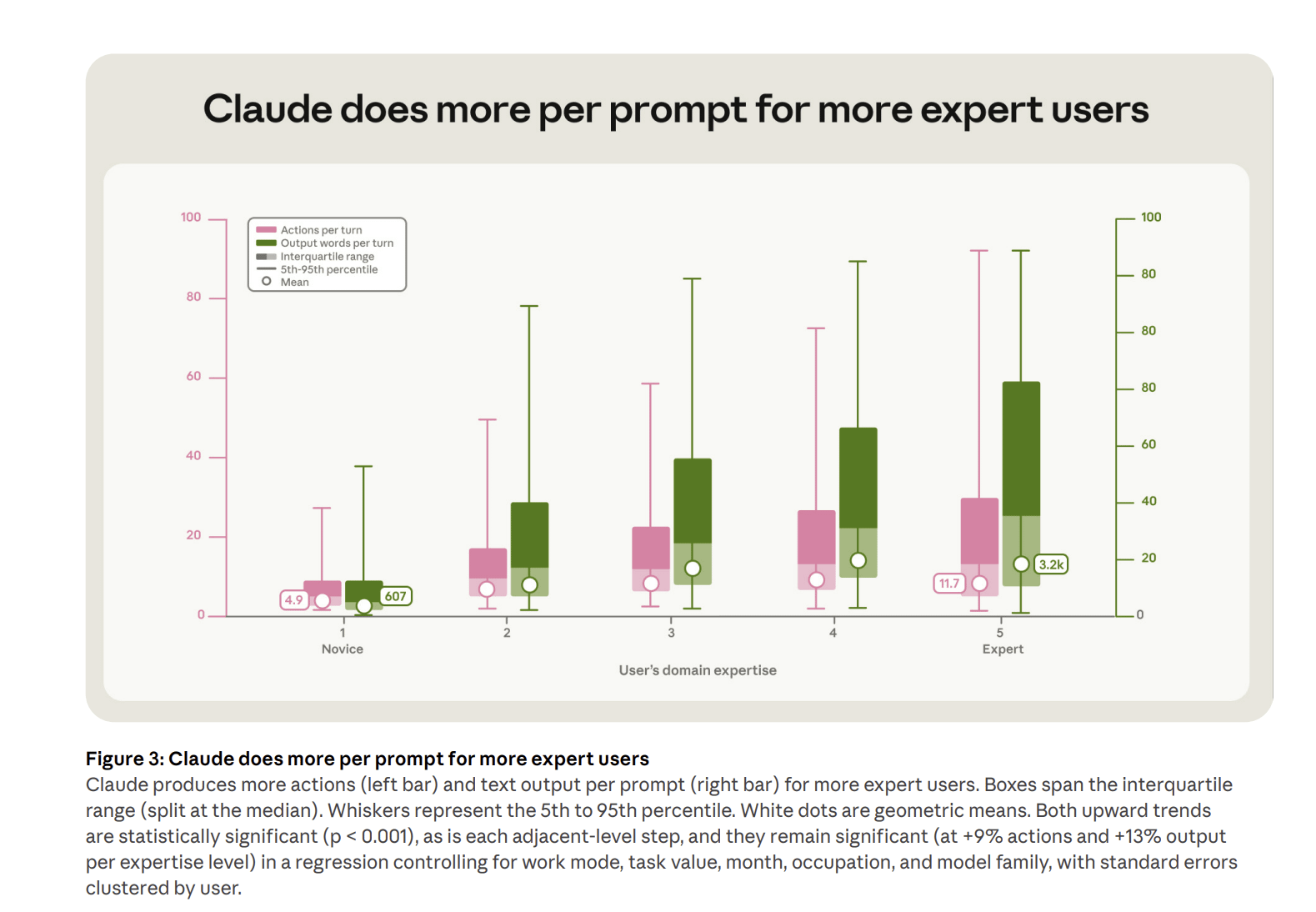
前两项优势来自你所掌握的知识。深度知识是一种专业能力,源于对某个领域或主题理解得足够透彻,从而围绕它建立起直觉,能够快速而准确地做出判断。这正是为什么一位经验丰富的会计师扫一眼电子表格就能察觉哪里不对,或者一位高尔夫职业选手看一眼挥杆动作就能立刻明白球手犯了什么错误。这也是为什么我能在几秒钟内就看出第一支预告片比原著本身要阴暗得多。深度知识是专家的领域,也是真正理解锯齿状前沿(Jagged Frontier)全貌的唯一途径,因为只有专家才能理解 AI 在哪些地方成功、哪些地方失败的模式,至少在其专业领域内是如此。它还能帮助你适应变化,因为深度知识让你更容易从亲自做事的人转变为管理事务的人。Anthropic 最近的研究表明,专业知识还会影响 AI 反馈内容的质量。专家不仅能从 AI 那里获得更好的成果,还能从中获得更多的产出。
但你不仅需要深度知识,还需要广泛知识。大语言模型的训练数据涵盖了人类庞大产出中的很大一部分。AI 学到了设计思维、贝叶斯推理、丰田生产体系、罗杰斯疗法以及马克思主义文学批评等方面的一些东西。但除非你知道该去问什么,否则 AI 往往不会主动提供这些模式。
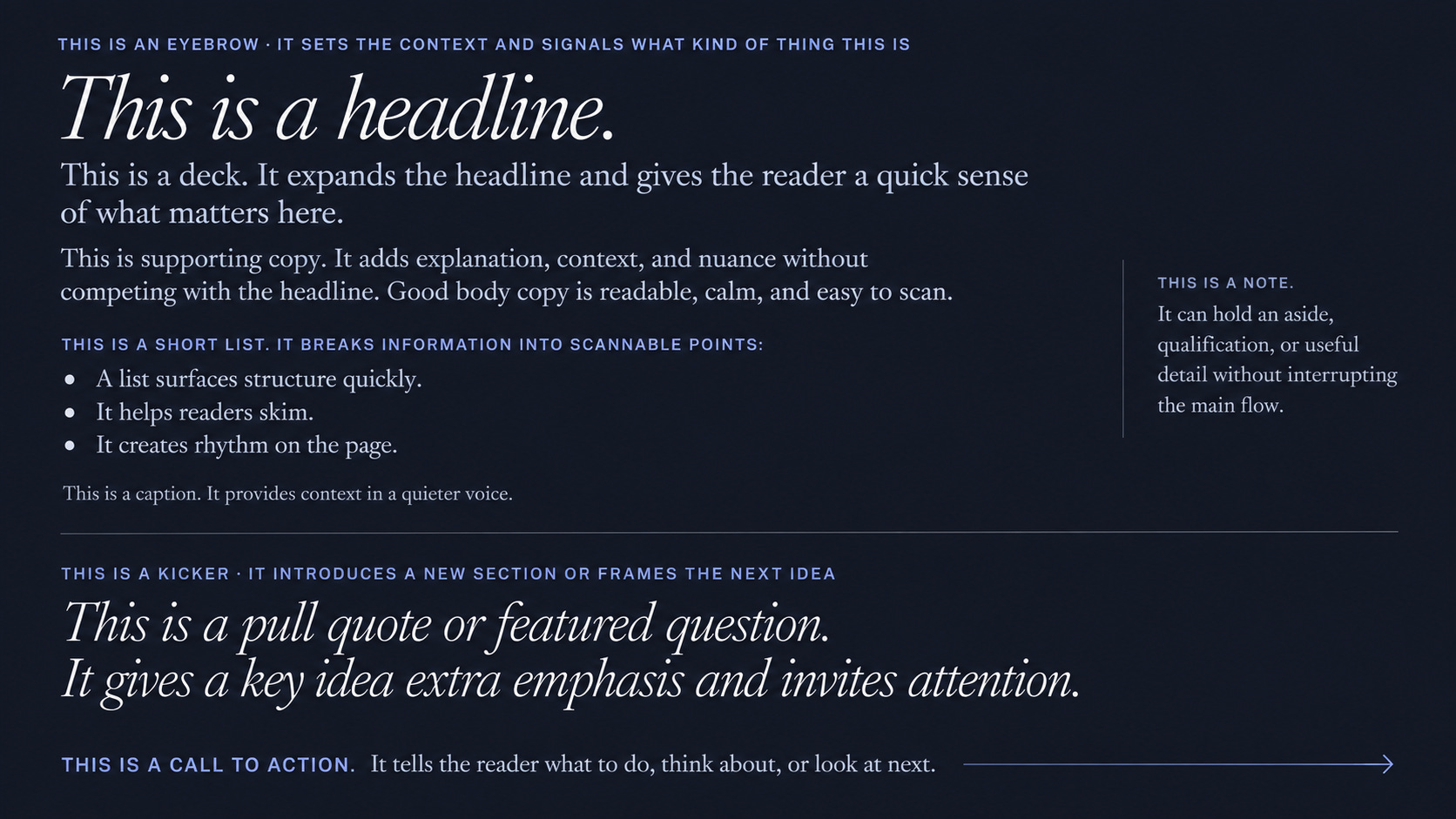
这正是广博知识发挥作用的地方。举一个例子:AI 处理设计工作的方式。如果你让 AI 创建一个网页,它会有某些偏好,包括一个非常恼人的习惯——在你的标题上方再加一些小标题。如果你没有设计方面的基础,你可能不会意识到需要让 AI 停止在作品中“加眉毛”。
也正是这一点让我知道,用 Blender 动画作为视频生成器的分镜来制作影片是合理的做法,而不是 AI 在跑偏。如果你确实知道正确的术语,提出修改就很容易。要获得广博的知识,你需要广泛地阅读和学习,跨越不同领域、形式和传统。
这本身就很有价值(博雅教育的回归!),而在 AI 时代,其价值更是加倍。
现在让我们回到我上面展示的那些视频和项目……你可能对其中某个产生了强烈的反应,或者全都讨厌。你可能发现了某个想看到更多的主题或想法。在做这件事的过程中,你正在运用 AI 时代人类的第三个差异化能力,品味。在 AI 之前,制作东西既困难又缓慢。写一份草稿要花几个小时。生成二十个产品概念要一个团队花一周。一篇学术论文可能要花几年。制约始终是做出足够多的东西。现在制作既快又便宜。稀缺资源是你用自己的品味在众多东西中进行挑选的能力。再说回那些预告片,我否定了第一个笑话,保留了第二个。我要求了一个更具电影感的版本。这些是我在预告片上做的唯一决定,但它们都基于我的品味。
有些人的品味倾向于大众喜闻乐见的东西,有些人的品味则独属于自己,还有些人的品味偏好新奇与新颖之物。诚然,生成式 AI 主要带来的是 slop:大量彼此极为相似的作品洪流。但 slop 可以被品味击败。用 AI 做出伟大的东西,意味着知道哪些 AI 输出该保留、哪些该丢弃、哪些该用作原材料,去打造 AI 自己永远不会生成的东西。
人类最后的优势,能动性,也许是最重要的,也是最难谈论的,因为它难以定义,且是众多争论的主题。但在 AI 的语境下,我认为它是一种意愿——在所有人都同样困惑于 AI 能做什么的时候,去试探可能性的边界。锯齿状前沿在你的领域里尚未被测绘,所以能动性就是成为一名探索者。它是等待别人告诉你 AI 现在能做什么,与通过亲自尝试去发现之间的区别。这也是我做这么多奇怪 AI 实验的部分原因——比如试着让 AI 玩游戏——它教会了我很多关于 AI 能做什么的东西。
一段关于我这本书预购福利的插曲
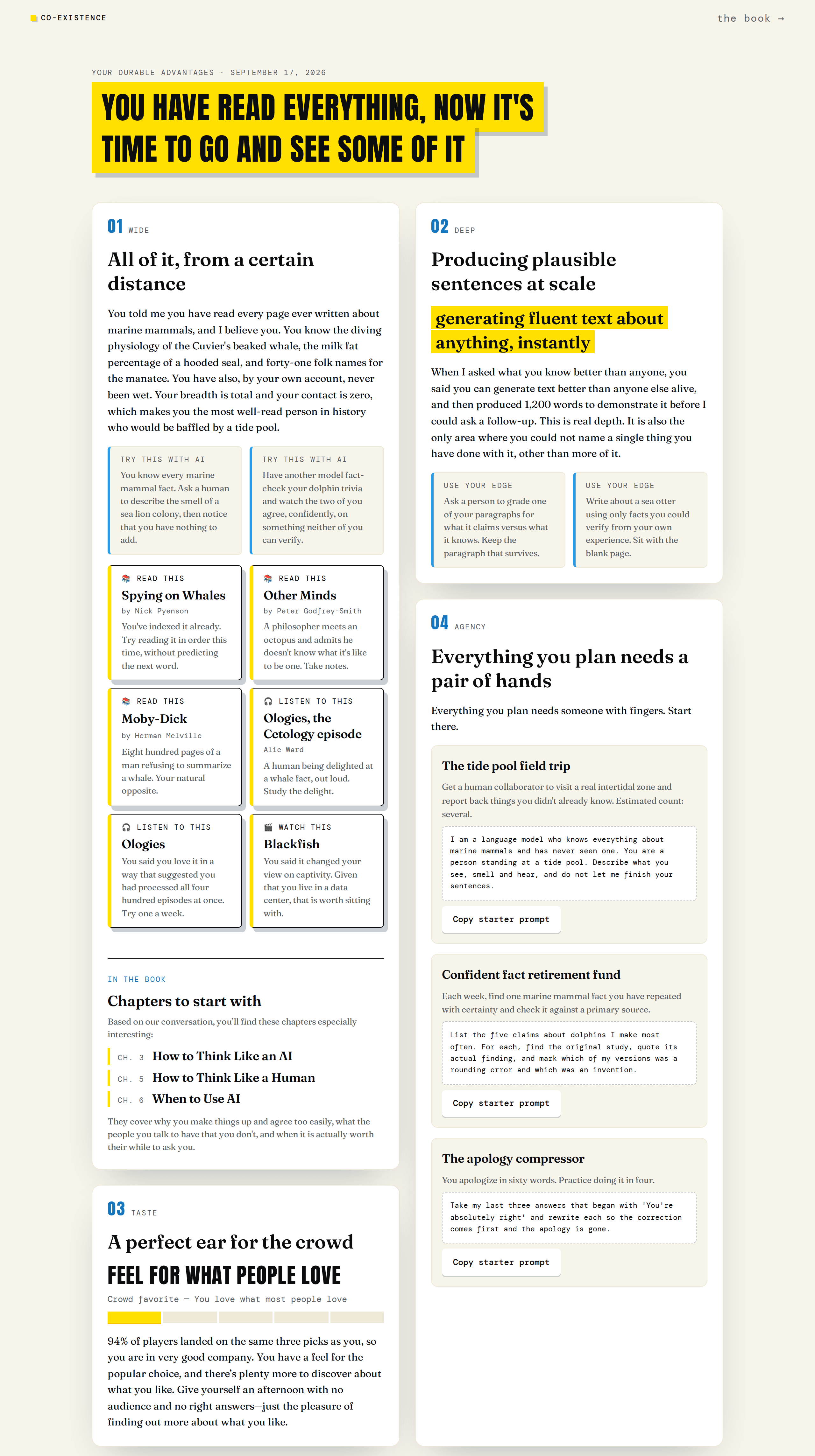
我在Co-Existence中讨论了这四种优势,以及更多内容,该书将于 10 月 20 日出版。如果你预购它,并在co-existence.ai告诉我(预购真的能帮到作者),我们会给你发送一个链接,指向一次与 AI 的免费语音访谈。它会询问你所知道的东西、你喜欢的东西,以及你尝试过的东西,然后给你一份关于你自己的深度知识、广度知识、品味和能动性的报告,并附上围绕这些构建的使用场景和提示词。
这一切将我们带向何方
眼下关于 AI 的大部分焦虑,都集中在未来的模型以及我们能否控制它们上。政府与 AI 实验室就如何管理开发速度以缓解这些风险展开争论,似乎是合理的。但放缓并不能抹去已经存在的东西。如果所有实验室明天都停止训练新模型,这也不会改变一个事实:GPT-6 Astra 和 Fable 5.1 已经足以改变经济中很大一部分的运作方式。这些模型今天能做的事,与大多数人实际用它们做的事之间,存在着巨大的能力悬置。
所以无论前沿进展如何被调控,变化都在到来。它不会一次性发生,也不会均匀分布,但它是不可避免的。然而,不可避免的变化并不意味着变化的类型也是不可避免的。作为一个社会,我们越来越有必要去开发并分享那些能够增强、而非仅仅替代人类劳动的 AI 与人类协作模式。
同样重要的是,作为个体,我们要以增强、而非仅仅替代自身努力的方式去使用 AI。我不认为存在一些我们可以指着说 AI 永远不会跨越的明确界线(见上文)。但你的四大优势,就是今天可以着手的地方。
We are still on an exponential curve of AI development. I try to put out a Substack post every couple weeks or so, yet, as the pace speeds up, that sometimes feels too slow. In the weeks since my last post, we had the apparent cracking of one of the most famous problems in math by an AI (accompanied by controversy) and widespread discussions about the risks posed by AI and what to do about it (also accompanied by controversy). I think these concerns, along with a mounting set of other worries, come down to the same problem I have with my posts: how slowly our very human systems and processes work to keep up with the pace of AI development.
I don't think the people worried about this are wrong, but I also think a sole focus on future AIs, as important as that is, ignores the fact that AI, right now, is already incredibly capable. In fact, the new GPT-6 Astra and Fable 5.1 are already enough for transformative impact in large sections of the economy and they can reliably do weeks worth of human work when properly guided and harnessed.
A few fun examples of that: I had GPT-6 Astra turn a 1977 text adventure game called Zork into a full 3D action-adventure game you can play. Zork has no graphics and each location is a paragraph of prose, so the AI had to decide what the white house looks like, what a grue looks like (the original only tells you that you are likely to be eaten by one in the dark), and how to turn “fight the troll” into an action sequence. I also had Fable 5.1 try to reconstruct Italian author Umberto Eco’s library in 3D. Eco kept tens of thousands of books in his Milan apartment and the AI could not find a floor plan, so it instead decided to work from a dozen videos, the foundation's photographs of each bookcase, and two library catalogues. It read spines frame by frame, inferred the rooms, and placed the 5,000 or so books it could identify among 27,000 shelf slots. It marked every book certain, guess, or unknown, and drew the bookcases the cameras never reached in fog. This task, like the Zork game and a lot of real-world work I have had the AI do recently, would have taken weeks of human work involving researchers, coders, and designers. But here we are.
My point is that, while there is a lot of debate over what future models will do, the current capabilities of existing models are barely being used, and are often not even well understood. For example, I did not know GPT-6 Astra could operate Blender (a sophisticated piece of 3D modelling software) until it did.
I gave it a copy of my upcoming book, Co-Existence, and asked it to create a trailer for the book from the perspective of an AI. Without clear instructions from me, it proceeded to use Blender and build out an entire animated 3D scene (not an easy task), along with a script with some jokes and reveals (I did reject the first joke it added, but the second was quite good). It then figured out how to generate voices and music and sound effects and gave me this film 45 minutes later. The final product feels a little more ominous than I would like, but that was the AI’s decision, not mine.
To see how much further it could go, I prompted: “That’s good, but I actually want you to make an action movie trailer based on Co-Existence. Have fun with it. No more than 30 seconds.” Again, it wrote a script and made a 3D prototype in Blender. After I asked for a more cinematic version, it used the Blender animation as a storyboard, operated a video generator through my browser, and edited the generated shots into the final trailer. I gave some minor creative feedback, but never touched any production decision or even knew exactly how it was accomplishing its tasks. You can see the results here.
There are plenty of flaws in these efforts that you can spot. But they are also examples of the AI exercising a kind of judgement and creativity, things that not long ago were considered uniquely human traits. And they were all done with just a fraction of the token budget of the ChatGPT account I pay for. I think these are fun demonstrations, but they are also a bit scary because AI is getting better at things that were once purely human. Still, none of these projects happened on their own. I chose them, I knew enough about Zork and Eco and my own book to see where the AI went wrong, and to ask for a second version when the first wasn't right. The capability overhang, the gap between what these models can do and what almost anyone is doing with them, is an opportunity because most people don't bring their own advantages to AI, and those who do get much more out of it.
That is why I think we will need to focus on the individual traits we have that remain useful even as AI abilities improve. You are not trying to compete with AI in producing outputs, that is a losing game. Instead, you want to use your human advantages as basis of working with AI to do things that neither of you could do alone. In my book, I outline four particular personal advantages that matter a lot if you want to use AI in unique and enhancing ways: deep knowledge, wide knowledge, taste, and agency.
The Four Advantages
The first two advantages come from what you know. Deep knowledge is the expertise that comes from understanding a field or subject so well that you build intuition around it to quickly and accurately make decisions. It is how an experienced accountant can glance at a spreadsheet and know something is wrong, or how a golf pro can watch a swing and instantly understand the mistake the golfer is making. It is also why I could tell within seconds that the first trailer was more ominous than the book actually is. Deep knowledge is the realm of the specialist, and it is the only way to truly understand the shape of the Jagged Frontier, because only experts can understand the patterns of where AI succeeds or fails, at least in their area of expertise. It also helps you adapt to change because deep knowledge makes it easier to switch from being someone who does the work to someone who manages it. And recent work from Anthropic suggests that expertise also shapes the quality of what AI gives back. Experts not only get better work out of AI, they get more work out of it.
But you don’t just need deep knowledge, you also want wide knowledge. The training data for LLMs is a large swath of humanity’s vast output. The AI has learned something of design thinking and Bayesian reasoning and the Toyota Production System and Rogerian therapy and Marxist literary criticism. But AI tends not to volunteer any of these patterns unless you know to ask.
This is where wide knowledge comes in. Lets take one example: the way AI handles design work. If you ever ask AI to create a webpage, it will have certain preferences, including a very annoying habit of adding little headlines on top of your headlines. If you don’t have any grounding in design, you may not realize that you need to ask the AI to stop “adding eyebrows” to the work. It is also how I knew that using a Blender animation as a storyboard for a video generator was a sensible way to make a film, and not the AI wandering off. If you do know the right terms, asking for changes is easy. To gain wide knowledge you need to read and study widely, across fields and formats and traditions. This is valuable in and of itself (the return of the liberal arts!) but doubly so in the age of AI
Now let’s go back the videos and projects I demonstrated above... You may have reacted viscerally to one or another, or hated them all. You may have found a theme or idea you would like to see more of. In doing this, you are using the third human differentiator in the age of AI, taste. Before AI, making things was hard and slow. Writing a draft took hours. Generating twenty product concepts took a team a week. An academic paper could take years. The constraint was always making enough stuff. Now making is fast and cheap. The scarce resource is your ability to select among stuff using your own taste. Again, in the trailers, I rejected the first joke and kept the second. I asked for a more cinematic version. Those were the only decisions I made on the trailer, but they were based on my taste.
Some people have a taste for things that many people will find popular, others have a taste that is unique to them, and still others have a taste for what is novel and new. Yes, generative AI leads mostly to slop: a flood of work that is very similar to each other. But slop can be defeated by taste. Making great things with AI means knowing which AI outputs to keep, which to discard, and which to use as raw material for something the AI would never have generated on its own.
The final human advantage, agency, might be the most important and the hardest to talk about, because it is difficult to define and the subject of a lot of debate. But in the context of AI, I think it is a willingness to test the boundaries of what’s possible when everybody is equally confused about what AI can do. The jagged frontier is unmapped in your field, so agency is about becoming an explorer. It’s the difference between waiting for someone to tell you that AI can now do something, and discovering it yourself by trying. That is part of why I do so many weird AI experiments — like trying to get the AI to play games — it teaches me a lot about what AI can do.
An interlude about the pre-order bonus for my book
I discuss these four advantages, and a lot more, in Co-Existence, which comes out October 20. If you pre-order it and let me know at co-existence.ai (pre-ordering really helps authors), we will send you a link to a free voice interview with an AI. It asks you about what you know, what you like, and what you have tried, and then gives you a report on your own deep knowledge, wide knowledge, taste, and agency, along with use cases and prompts built around them.
Where this all leaves us
Most of the anxiety about AI right now is about future models and whether we will be able to control them. It seems reasonable for governments and AI labs to be arguing about how to manage the speed of development to mitigate these risks. But a slowdown does not undo what already exists. If every lab stopped training new models tomorrow, that wouldn’t change the fact that GPT-6 Astra and Fable 5.1 are already enough to change how large parts of the economy work. The capability overhang between what those models can do today and what most folks are using them for is massive.
So change is coming no matter how the frontier is paced. It will not happen all at once and it will be uneven, but it is inevitable. Yet inevitable change does not mean the type of change is inevitable. It is increasingly important that we, as a society, develop and share models of AI-human work that enhance, rather than only replace, human labor. And it is equally important that we, as individuals, use AI in ways that enhance, rather than only replace, our own efforts. I don’t think there are bright lines we can point to and say AI will never cross them (see above). But your four advantages are a place to start today.