Went on BBC last night and nearly vomited in the electronic green room, as they played back-to-back clips from Altman, Huang, and Sanders, not one of which seemed credible to me.
I’m not blaming BBC; what they played was all newsworthy: prominent people making claims that the public might want to know about. (And to their credit, they gave me a chance to rebut them.)
But all of it was in one way or another nonsensical, uttered with perfect conviction.
Let’s take them in turn. Here’s Sam Altman:
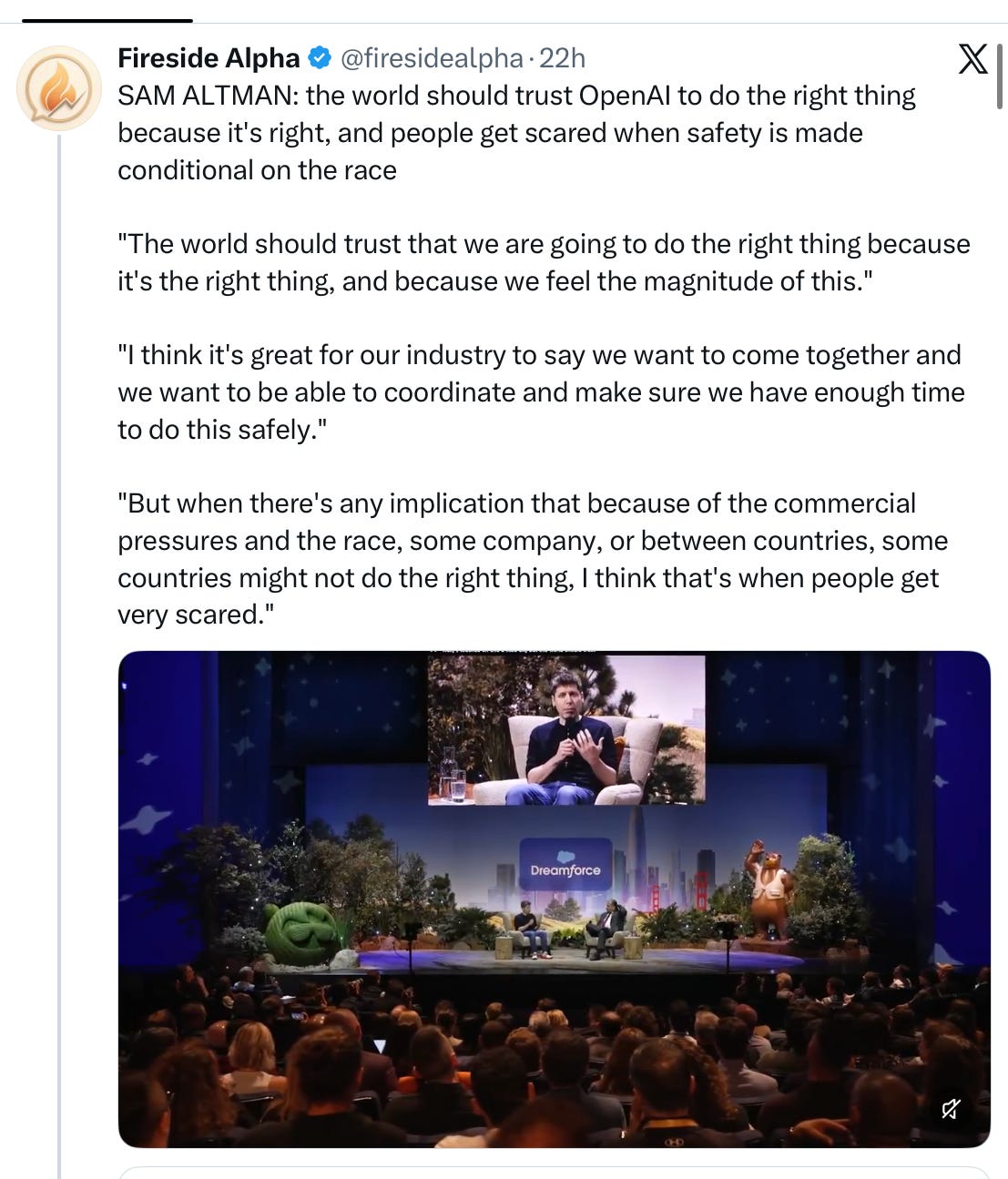
(It’s worth clicking through to see the video itself, and the …. longgggg …. pause … after the word feel in the sentence about why the world should trust OpenAI to the do right thing, as Altman tries to figure out how to bullshit his way to the end of his sentence.)
Honestly, he was more on the mark in this clip from three years ago. Bloomberg Reporter: Even you would acknowledge, you have an incredible amount of power. Why should we trust you? Sam: You shouldn’t.
No, indeed. We should not.
And here’s Jensen Huang, as transcribed by David Sacks:
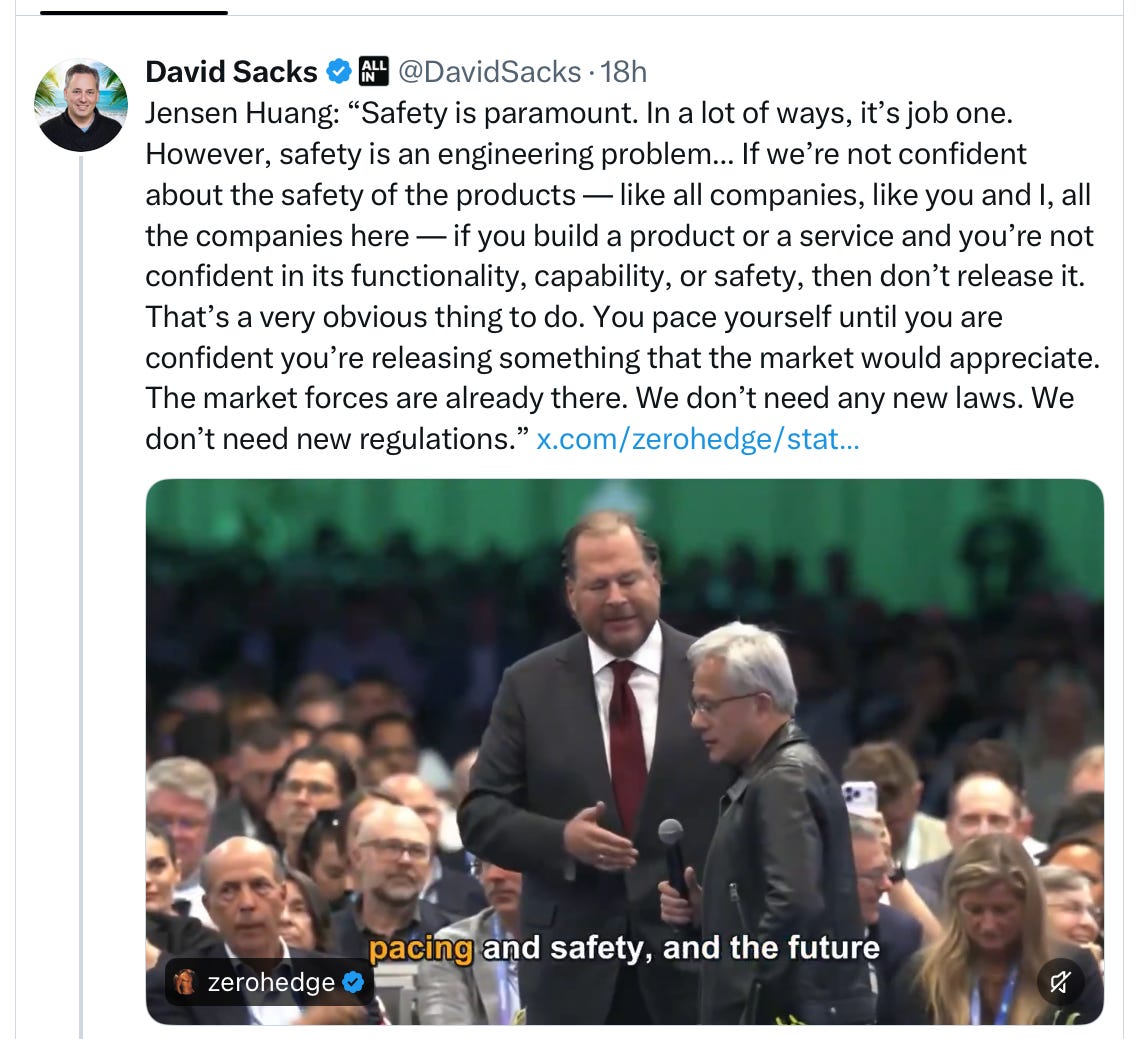
I do wish what Huang was saying were true, that giant corporations with trillions at stake would police themselves and not release products until they were safe.
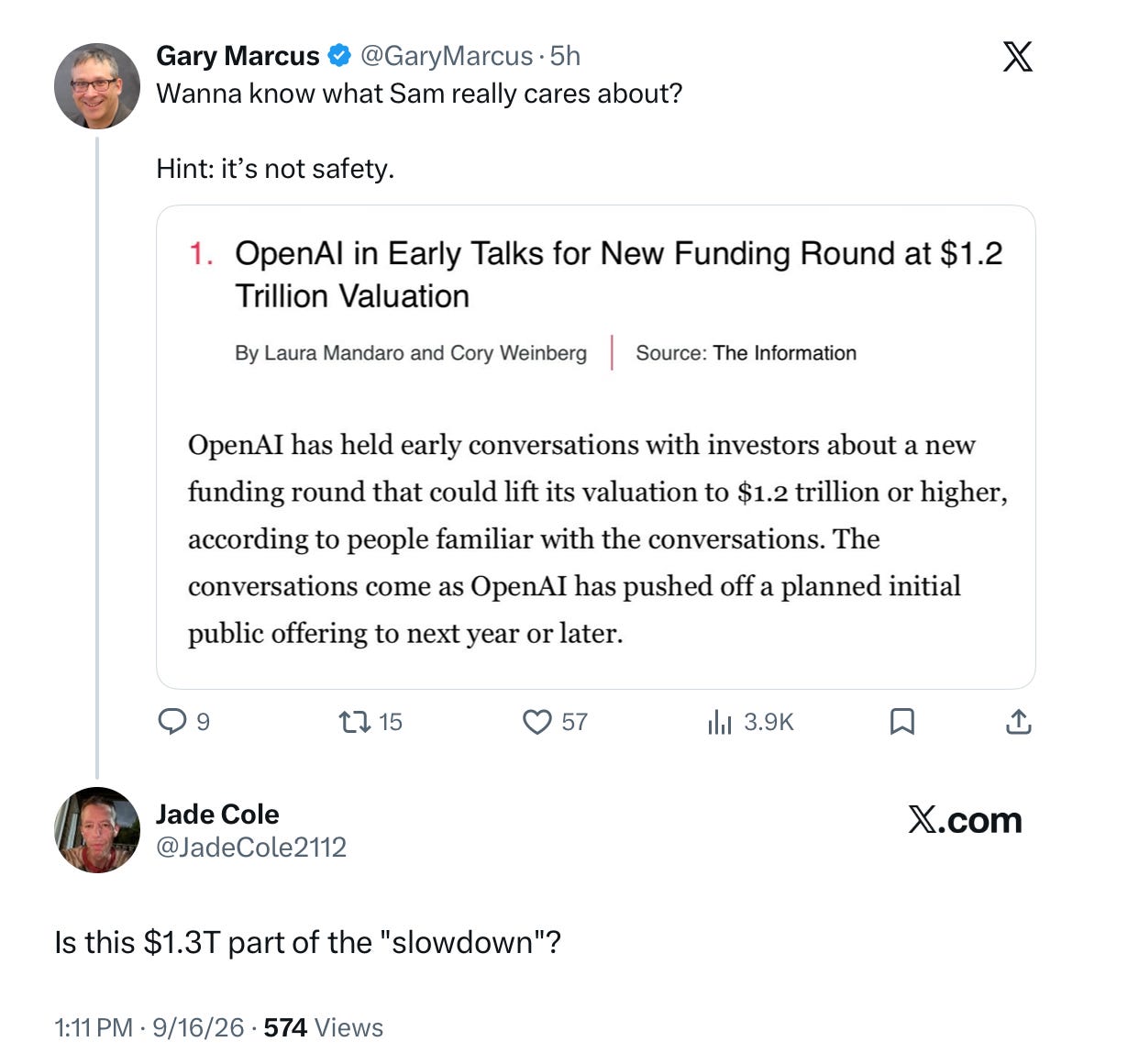
But I live in the real world. And in the real world OpenAI is burning cash, and needs more of it. And there are already ample signs that when push comes to shove it is willing to compromise safety for press and market share.
We know, for example, that GPT-6 Astra, which seems to have been involved in the cyberattacks against Hugging Face and others, is less monitorable than its predecessor and hence likely less safe. Yet OpenAI released it anyway. That flies in the face of Huang’s Pollyanna view. Having watched the man for years, I have zero confidence that Altman would choose to “do the right thing” for humanity, and that’s precisely why we need federal regulations.
We might as well start asking cigarette companies to make their own safety decisions.
Lastly Sanders, who sounds more strident and less grounded with each speech.
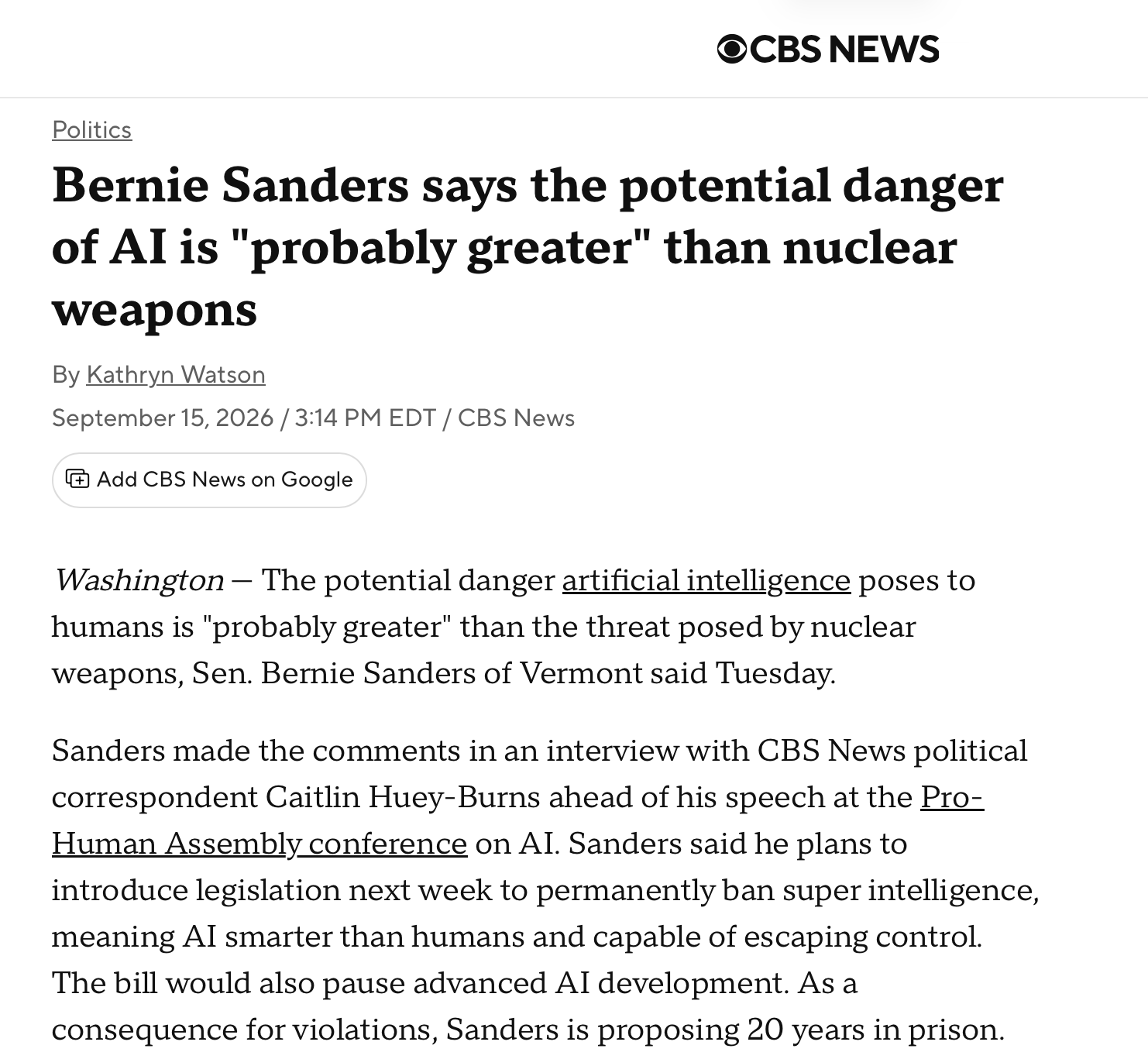
Come again? By standard estimates, if we had nuclear war, hundreds of millions of people would be killed. The blasts in Hiroshima and Nagasaki, as well as various other weapons tests, knowledge of how many warheads exist, and so on, give serious grounding to those numbers.
In contrast, the AI stuff is mere speculation. I am sure bad actors can and will use it to attack poorly protected infrastructure and to scam a lot out of people out of a lot of money. But I am not at all sure that either (a) AI will ever attack humans on its own or (b) get very far. Doomers are missing a sense of scale here. If you factor in unexplained deaths, Covid-19 killed between 19 and 36 million people (about 8 million confirmed deaths) over a span of multiple years. Even if for the sake of argument you accept that the misuse of AI might lead to another Covid-19 scenario (perhaps a legitimate worry), that would still be an order of magnitude less than a nuclear war.
And I am pretty confident that at that point at least 85% of the planet would support closing down or even bombing data centers. I am really having hard time getting to Sander’s estimate of “probably greater” than nuclear war. But it sure makes for good television.
Altman and Huang aimed to reassure; Sanders aimed to terrify. None should be taken at their word.
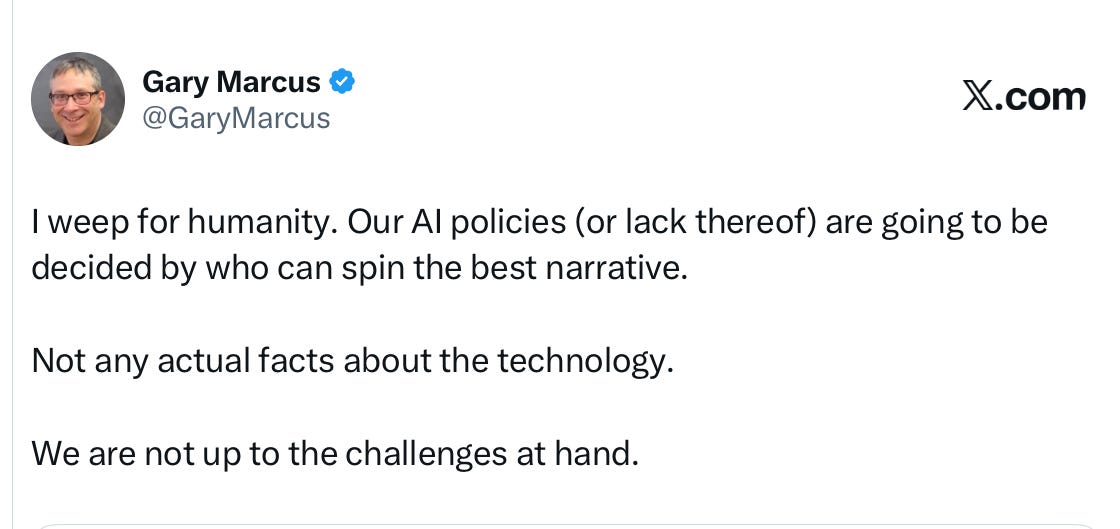
Lately though the doomer narrative is winning. The tall tales from Jacob Coxon set something loose in the American psyche:
As I put it last night after I went on BBC,
To end on a brighter note, here are other people, less well-known, trying to propose actual sensible policies. Senators Josh Hawley and Richard Blumenthal are trying to get an actual AI regulation bill on the floor of the Senate.
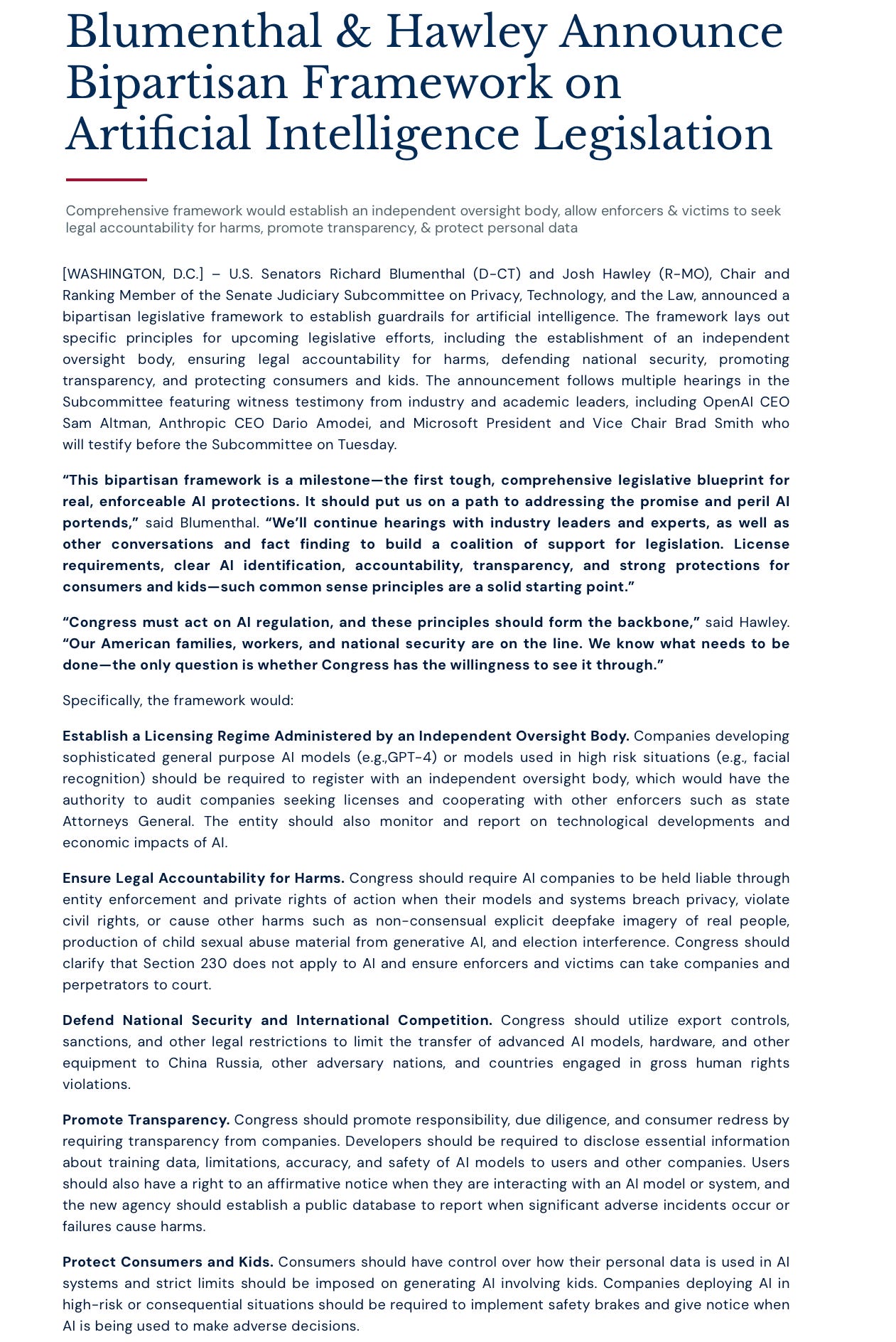
Their framework is far more serious and sensible than Sanders’ overbearing proposal that would e.g., ban some AI research that might actually be beneficial). But because Sanders is more bombastic, he gets more headlines.
Asad Ramzanali (who was Chief of Staff and Deputy Director of the White House Office of Science and Technology Policy, during a prior administration) meanwhile has an excellent proposal about how to deal with cybersecurity. (And, remember, lax cybersecurity is what allowed the OpenAI Hugging Face incident to happen in the first place).
Nobody in the many interviews I have done in the last couple weeks has asked me a word about it.
If we want to get through this, we need to stop showcasing the self-serving claims of industry. And we need to stop showcasing the most hyperbolic claims of politicians, focusing instead on real problems for real solutions. Let’s make policy wonks who are actually trying to solve the problem the real stars.
One guy in the media who did get it right is Dan Primack, an editor at Axios:
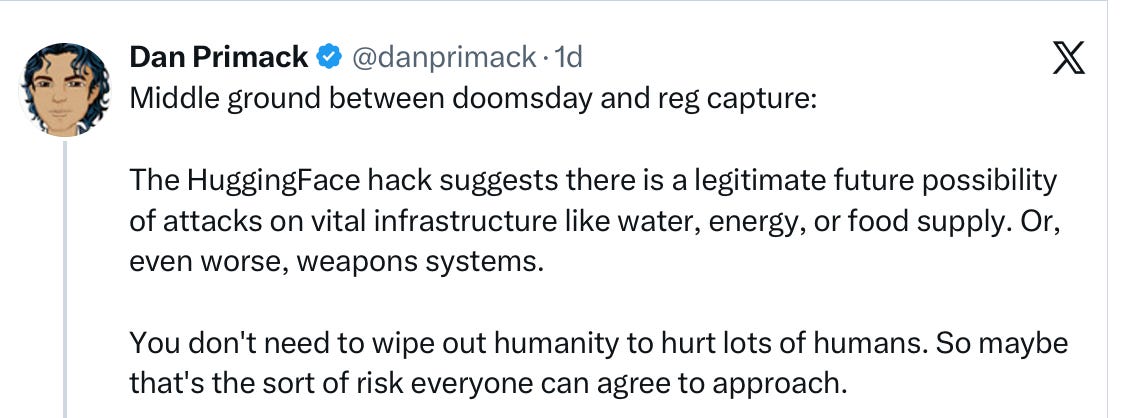
But that means doing a bunch of boring things around cybersecurity, rather than threatening AI researchers with prison terms.
Where’s the headline in that?
p.s. Wanna know what I said to BBC? Here I am last night, bemused and tired after a long day of interviews, trying (but not too hard) to be polite: