Claude Fable 代表着 AI 的又一次巨大飞跃
Ethan Mollick
2026年6月9日
我提前获得了首个即将向公众发布的 Mythos 级 AI 模型 Claude 5 Fable 的访问权限。目前关于 Mythos 的讨论大多集中在其对软件安全的影响上,但我在除这方面之外的所有领域都进行了测试(围绕 Fable 的防护机制基本上完全阻止它被用于网络安全)。我的结论是:它相对于我用过的所有模型都是一次非常真实的跨越,而且,或许更重要的是,它表明我们与 AI 的关系正在发生剧烈的变化。
首先,Fable 到底有多强?在我进行的一项又一项实验中,它以相当大的优势超越了我用过的几乎所有其他公开模型。它在众多问题上都表现出色,并产出了一些令人惊叹的结果——它能连续工作长达十几个小时,执行多页规格说明的任务。稍后我会带你看几个更复杂、更严肃的使用案例,但你能看到它在每一项任务上都有全面提升。在这篇文章里传达这一点的问题在于,许多最令人印象深刻的结果只会对我的一部分读者有吸引力。例如,它仅凭一个提示词和一条反馈,就做出了我迄今见过的 AI 所写出的最精深的学术社会科学论文。它还创作了一首 10 页的史诗押韵长诗,主题是理发,且每个单词都以字母 s 开头。
所以,作为一个更容易上手、也更有趣的例子,我还让它做了一批游戏供你试玩。所有这些都只需要在 Claude Code 中输入一条初始提示词,Fable 必须把我模糊的提示词转化成可运行的东西,之后再加上几条简单的鼓励(“把它做得更好”)或反馈。这些作品特别令人印象深刻的地方在于,Claude 无法生成图像,所以每一件美术素材或 3D 物体都是纯粹用数学造出来的,没有使用任何外部资源。你可以试试其中任何一个:一个抛硬币游戏(提示词:“Balatro,但玩法是抛硬币”),相当好玩;一个贪吃蛇游戏,蛇是自我意识的,会发生各种疯狂的事情;还有一个关于沉入深渊、看看那里有什么的游戏。
所以产出确实令人印象深刻。但是,尤其是在我转向更严肃的项目时,我常常觉得使用这个工具体验介于愉悦和不安之间。愉悦是因为我只是提了个要求,事情就成了。不安也是因为我只是提了个要求,事情就成了。
地图与方法
要理解原因,最好先了解 Fable 是如何完成工作的,为此我想用一个我在许多此前的 AI 模型上测试过的例子:构建等时线地图。这是一种展示在给定时间内你能走多远的地图,最早的一张诞生于 1881 年,展示的是从伦敦出发的旅行时间。
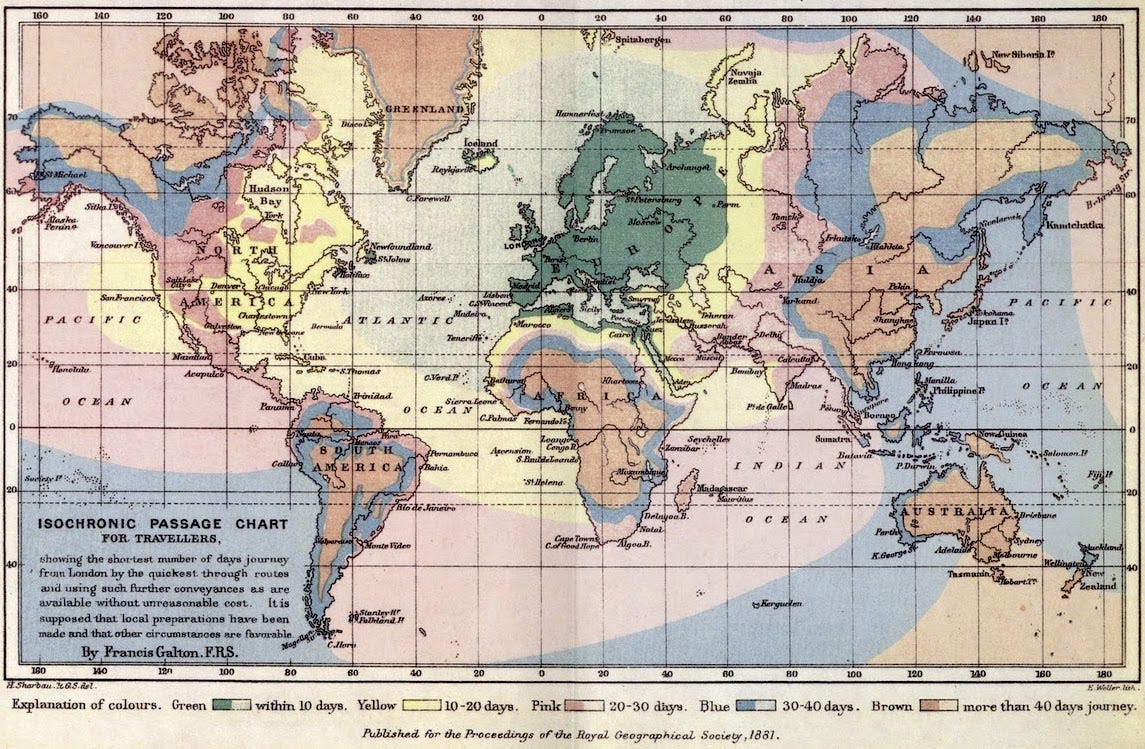
以往的模型在尝试绘制这样一张地图时,都做不出哪怕勉强可用的成果,因为这需要研究数千个潜在的行程距离,还要做大量细小的判断和决策。我决定在 Fable 上用 Claude Code 试试,提示词如下:我要你构建一张经过充分研究、设计精美的等时线地图,让我可以选择多个城市,并基于真实数据查看真实的等时线。我希望设计是独一无二的。你需要考虑飞机(以及往返机场的时间)、火车、步行和驾车。数据不需要是实时的,但应该基于你的研究和数据,是真实的。你可以先从几个城市入手,但覆盖越广越好,这应该是一个全新的项目。随后它建议按原版地图的风格来做。我同意了,它便开始工作。
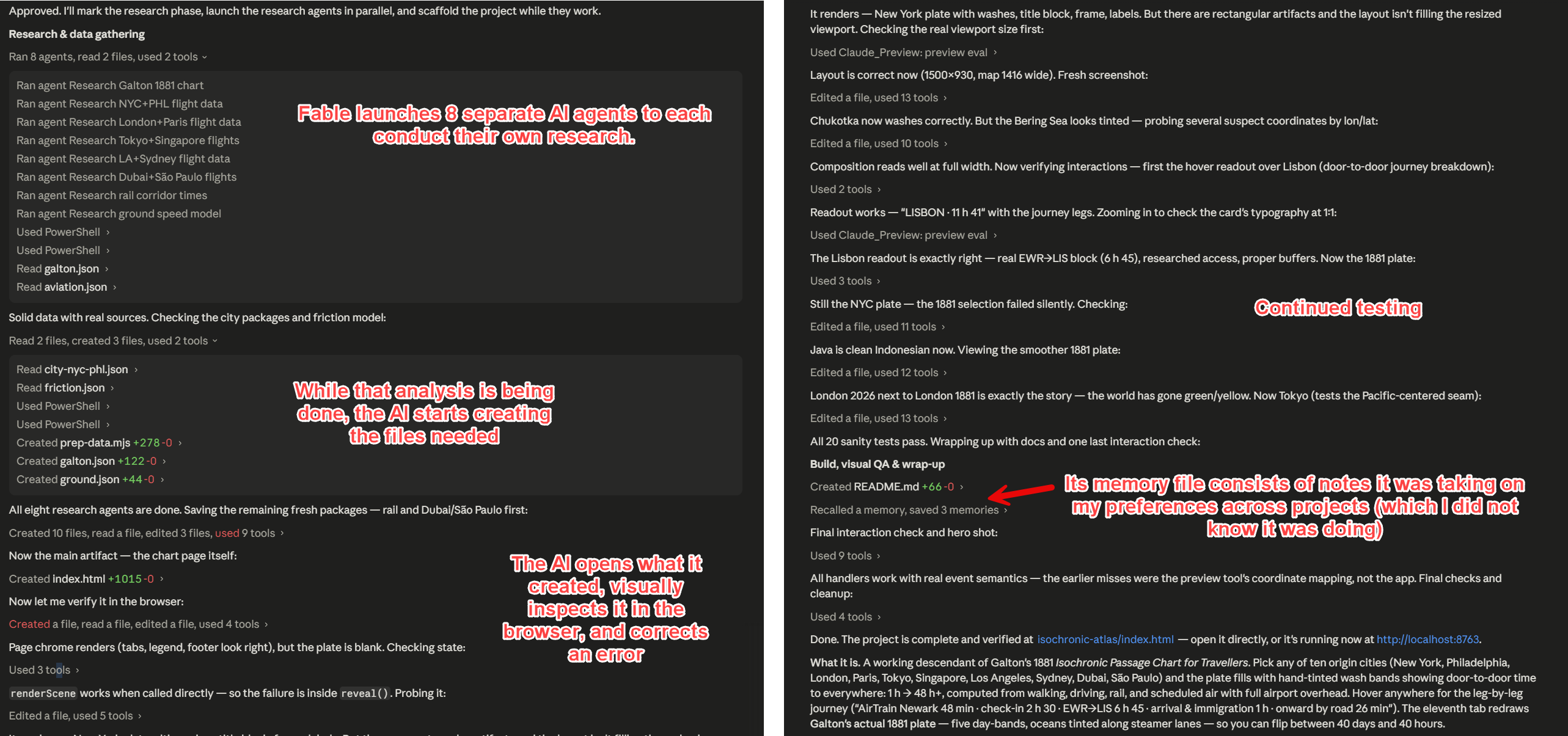
值得再看一遍这段 AI 自主进行的长达数小时的构建过程记录,因为你能看到一些不寻常的事情。首先,这个 AI 启动了多个其他 AI(我相信大多是较便宜的 Claude Sonnet)来帮助它研究出行时间,最终检索了超过 2,200 个具体航班、从 TGV 到新干线的各类列车时刻表,以及来自多篇学术论文的各国道路速度数据。
而在这些智能体运行的同时,它开始编写代码。接着它又启动了更多智能体和测试来验证自己的代码,整个过程还一直在记录自己的进展笔记。
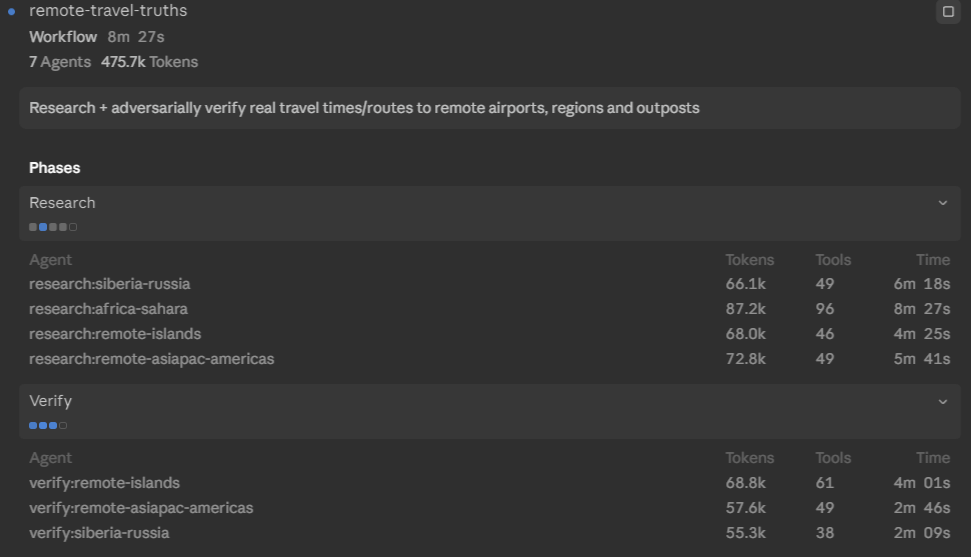
最终得到的是一张功能完备、精细程度令人印象深刻的地图,看起来和 1881 年的原版非常相似,但这并不意味着它完美无缺。我注意到很多偏远地点(比如格陵兰)只包含旅行时间的估算值,而非精确数字,于是我让 Fable 修复这个问题,指令中包括:实际查明到偏远机场和地点的旅行时间。这一次,AI 启动了一个工作流,由相互对抗的智能体小组进行研究并互相验证结果。它弄清了船只开往太平洋皮特凯恩岛的频率,以及如何从渥太华前往格里斯峡湾。而且它在极短的时间内消耗了巨量的 token(稍后会详细讲到这一点)。
结果令人印象深刻。我又朝着我感兴趣的方向推动了几次(包括要求采用其他可视化方式等)。我建议花几分钟点击浏览这些结果,你还可以在图表底部查看它所使用的方法和来源。

除非你真的热爱旅行和地图,否则这对你来说可能算不上一个有用的项目,但它表明 AI 能够解决一个涉及研究、数学、可视化开发、审美、判断、复杂编程等方面的难题。而且,令人不安的是我实际做的事情少之又少。我给出一个非常宏大的指令,AI 照做了。我给出几条小幅反馈,AI 自己就搞定了。我扮演的角色极其有限。
重要的是,不仅我相对于模型所做的工作量受限,我对模型如何做事的控制权也受限,比如模型为什么选择特定的方法,甚至其结果的深入程度也无法掌控。AI 决策过程的细节并没有展示给我,而且整个过程太长,根本不值得去逐步跟进。这张地图要求 AI 对数百个小选择做出判断,而它就直接做了,既没有让我理解这些选择,也没给我参与权衡的机会。从很多方面看,这堪称奇迹(我随时可以在最后要求修改);但从另一方面看,它把 AI 变成了终极黑箱。
与 Mythos 级别的模型协作
我从 Fable 得到的最雄心勃勃的项目需要多解释几句。我做过很多研究,其中人类会给出杂乱的答案,而任何形式的分析都需要对这些答案进行恰当的分类:一个想法有多创新?人们为什么喜欢这本书?为了弄清这些问题,我们过去依靠人类研究人员对某条信息做出判断,再用统计方法比较他们彼此的答案,以确定数据是否可信。近期大量研究表明,AI 或许能够完成这项重要工作,但校准 AI 与人类判断一直既困难又昂贵。于是我让 Fable 来解决这个问题,它先 生成了一份长达 19 页的复杂设计文档,然后着手执行。
它连续工作了九个半小时。
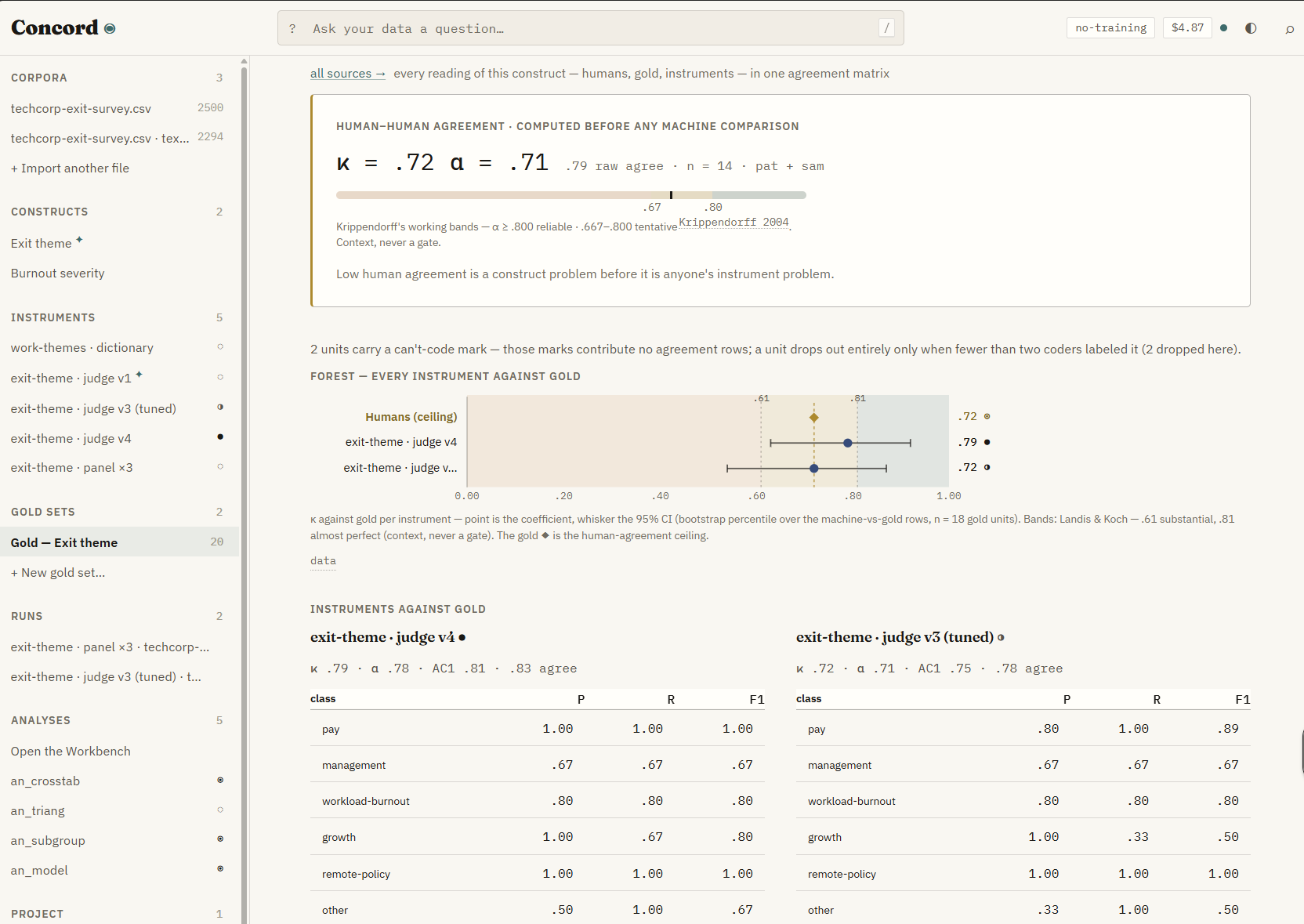
最终产出的是一个极其复杂的软件,AI 将其命名为 Concord,它可以接收多个数据集,校准人类与 AI 的响应,然后对结果进行复杂的数据分析。再次强调,它并不完美。作为领域专家,我能发现一些错误和遗漏(其中一些源于我要求的设计),并让 AI 加以修正。但这个项目以及许多其他项目的交付范围,超出了我以往见过的任何东西。就本例而言,这是一个研究人员多年来一直需要、却因不具盈利性而从未被开发出来的软件。你现在可以直接在这里使用或修改这些代码。我确信它并不完美(我只花了一个小时检查结果),但软件工程师可以解决那些我没能快速发现的潜在 bug(这也是为什么未来我们可能需要更多、而不是更少的程序员,来应对软件新用途的爆发式增长)。
这种能力伴随着怪异之处和局限性。局限之一是它的 token 消耗。Fable 的价格是 Opus 的两倍,而且它烧 token 的速度表明,它在生产环境中成本几何的答案是“很多”,尽管它巧妙地把任务委派给更便宜的模型,可能会大幅降低实际价格。
Fable 的安全护栏也会在最轻微的安全问题迹象下被触发,退回到较弱的 Claude 4.8 Opus,而且这种情况发生得太频繁了。锯齿状边界依然存在。例如,这个 AI 仍然用同样的怪异风格写作(事实上 Fable 生成的软件也带有 Claude 味的痕迹;它的进度报告也是如此,全是那种“承担重负、赢得答案”的腔调)。
但更深层的怪异之处在于,我几乎不需要做任何事,而且在它工作的过程中,我几乎什么都看不到。
去年我曾把这比作与一位巫师共事:你念动咒语,某件事就会发生。而如今有了 Fable,这咒语已经强大到我不再确定自己还是不是那个巫师。我更像是一位赞助人。我描述我想要什么,我付钱,然后我评判结果。施展魔法的过程发生在我无法目睹的地方,藏在成百上千个我从未有投票权的小决定之中。工作已从过程转向了结果。我不再掌控方向;我只是在委托。
这种被边缘化的状况有可能是暂时的,只是界面尚未跟上的产物,我们或许会得到更好的窗口来观察这些模型在做什么,以及更好的中途干预方式。但也有可能恰恰相反:模型能力越强,人类能做的有意义的事情就越少,而黑箱就是这种力量的代价。
我怀疑后者更可能是真实的方向。这些都不是显而易见意义上的失控。我依然可以引导 Fable,而且它对指令的服从能力非常出色:指令越宏大,结果越好。但引导已不再等同于亲手去做。我给模型做简报,它启动自己的智能体去研究、写作并互相检查工作,交回来的就是成品。
一位赞助人委托的是一位艺术家。而 Fable 更接近于一整个工作室,我只是那个在最终作品上签字验收、却从未踏进工作室半步的客户。
Claude Fable represents another big jump in AI
Ethan Mollick
Jun 09, 2026
I had early access to the first Mythos-class AI model being released to the public, Claude 5 Fable. Much of the discussion of Mythos has centered on its impact on software security, but I tested it on everything except that (the guardrails around Fable essentially prevent it from being used for cybersecurity at all). My conclusion is that it represents a very real leap over every model I have used before, and, maybe more important, suggests our relationship with AI is changing in drastic ways.
First, how good is Fable? In experiment after experiment I conducted, it outperformed basically every other public model I have used by a considerable margin. It was capable across many problems and produced some startling results — it would work up to a dozen hours executing on multi-page specifications. I’ll walk you through a couple of more complex, and serious, use cases shortly, but you could see the general improvement across the board on every task. The problem about communicating this in a post is that many of the most impressive results are going to be interesting to only small portions of my readers. For example, it made the most sophisticated academic social science paper I have yet seen from an AI from a single prompt and one piece of feedback. It also created a 10-page epic rhyming poem about a haircut where every word starts with the letter s.
So, as a more accessible and entertaining example, I also had it create a bunch of games you can try. All of these are one initial prompt in Claude Code where Fable had to take my vague prompts and generate something workable, followed by a couple of additional prompts with minor encouragement (“make it better”) or feedback. What makes these especially impressive is that Claude cannot generate images, so every piece of art or 3D object was made with math alone, not using any external assets. You can try any of them: a game about flipping coins (prompt: “Balatro, but for the game of coin flips”) that is quite fun; a snake game where the snake is self-aware and crazy things happen; or a game about descending into the depths to see what is there.
So the output is impressive. But, especially as I turned to more serious projects, I often felt using the tool was somewhere between delightful and unnerving. Delightful because I just asked for something at it happened. And also unnerving because I just asked for something and it happened.
Maps and Methods
To see why, it helps to understand the way in which Fable gets work done, and for that I want to turn to an example I have tested on many previous AI models: building an isochrone map. This is a map that shows the distance you can travel in a given length of time, and the first one was created in 1881 showing travel times from London.
No previous model did an even halfway useful job with trying to create a map like this because it involves researching thousands of potential trip distances and a lot of small judgement calls and decisions. I decided to try it on Fable using Claude Code with this prompt: i want you to build a fully researched and beautiful isochronic map that lets me pick various cities and see real isochronic lines based on real data. I want the design to be unique. You should take into account airports (and travel time to and from airports) trains, walking, driving. The data does not need to be live but should be real based on your research and data. You can start with a few cities but more general is better, this should be an entirely new project. It then suggested that it do this in the style of the original map. I agreed, and it got to work.
It is worth a second looking at the transcript of the multiple hour building session the AI went through on its own, because you can see some unusual things. First, the AI launched multiple other AIs (I believe mostly the cheaper Claude Sonnet) to help it conduct research on travel times, ultimately retrieving over 2,200 specific flights, the rail schedules for trains from the TGV to the Shinkansen, and road speeds per country from multiple academic papers. And while those agents were running, it started coding. Then it launched yet more agents and tests to verify its code, all the while taking notes about its progress.
The result was a fully functioning map of impressive sophistication that looked a lot like the 1881 original, but that doesn’t mean it was perfect. I noticed that a lot of remote locations (like Greenland) just contained estimates of travel time, not exact numbers, so I told Fable to fix it, including the instructions: actually get travel times to remote airports and locations. This time the AI launched a workflow, adversarial groups of agents that did research and tested each others results. It figured out how often ships sail to Pitcairn Island in the Pacific and how to get to Grise Fjord from Ottawa. And it used a tremendous number of tokens in a very short period of time (more on this soon).
The results were impressive. I pushed a few more times in directions that interested me (including asking for other visualization approaches, etc.). I would recommend spending a couple minutes clicking around the results, and you can read its methods and sources at the bottom of the graph.
This is probably not a useful project for you unless you really like travel and maps, but it is indicative of AI solving a hard problem involving research, math, visual development, taste, judgement, complex coding, and more. And, the unnerving part was how little I did. I gave a really ambitious instruction, the AI followed it. I gave a couple of minor pieces of feedback, and the AI figured it out. My role was extremely limited.
Importantly, it was just limited in how much work I did relative to the model, it was also limited in how much control I had over how the model did things, why the model chose particular approaches, or even how in-depth its results would be. The details of the AI’s decision making are not shown to me, and the process would be too long to even be worth following. The map required the AI to make judgement calls about hundreds of little choices, and it just made them, without me understanding the choices or having a chance to weigh in. In many ways, it is miraculous (I can always ask for edits at the end) on the other, it turns AI into the ultimate black box.
Working with a Mythos-class model
The most ambitious project I got from Fable takes a little more explanation. I do a lot of research where humans produce messy answers and doing any sort of analysis requires categorize those answers properly: how innovative is an idea? why do people like this book? To figure this out, we used human researchers to make a judgement call about a piece of information, and statistically compare their answers with others to figure out whether we can trust the data. A lot of recent research has shown that AIs might be able to do this important work, but calibrating AI and human judgement has been difficult and expensive. So I asked Fable to solve the problem, first generating a complex 19 page design document and then executing it.
It worked for nine and a half hours.
The result was an extremely sophisticated piece of software the AI called Concord that could take in multiple datasets, calibrate human and AI responses, and then conduct complex data analysis on the results. Again, it wasn’t perfect. As an expert, I was able to spot some errors and omissions (some as a result of the design I had asked for) that I had the AI correct. But the scope of the delivery on this project, and many others, exceeded anything I had seen before. In this case, it was a piece of software that researchers have needed for years but was never profitable to create. You can now just use or modify the code here. I am sure it is not perfect (I only spent an hour working with the results), but a software engineer would iron out the remaining potential bugs that I could not find quickly (which is one reason we may need more, not less, coders in the future, to help with the explosion of new uses for software).
This power goes hand in hand with strangeness and limits. Among those limits is its token usage. Fable is twice as expensive as Opus, and it burns through tokens at a rate that suggests the answer to how much it costs in production is “a lot,” though its clever delegation to cheaper models may lower the real price considerably. The guardrails for Fable also trip at the faintest hint of a security problem, defaulting to the less powerful Claude 4.8 Opus, and it happens way too often. And the jagged frontier is still there. For example, the AI still writes in the same weird style (in fact the software Fable produces bears traces of Claudisms; so do its progress reports, all that carrying the weight and earning the answer). But the deeper strangeness is how little I had to do, and how little I could see while it was being done.
Last year I called this working with a wizard: you chant the spell and something happens. With Fable the spell has gotten powerful enough that I am no longer sure I am the wizard. I am closer to a patron. I describe what I want, I pay for it, and I judge the result. The conjuring happens somewhere I cannot watch, in hundreds of small choices I never get a vote on. The work has shifted from process to outcome. I no longer steer; I commission.
It is possible the sidelining is temporary, just an artifact of interfaces that haven’t caught up, and that we’ll get better windows into what these models are doing and better ways to steer them midstream. It is also possible that the opposite is true: that the more capable the model, the less there is for a human to meaningfully do, and the black box is the price of the power. I suspect that is more likely to be the real direction. None of this is a loss of control in the obvious sense. I can still steer Fable, and it follows instructions remarkably well: the more ambitious the instruction, the better the result. But steering is no longer the same as doing. I brief the model, it spins up its own agents to research and write and check one another’s work, and what comes back is finished. A patron commissions a single artist. Fable is closer to a whole studio, where I am the client who signs off on the final work without ever setting foot on the floor.